


Want your Instagram videos to look perfect in 2026? Many creators upload videos that get cropped, compressed, or look blurry—but you can avoid all that with the right sizes and formats! Whether it’s Reels, Stories, Feed, or IGTV, knowing the latest specs is key to keeping your content sharp and engaging.
In this guide, we’ve compiled the most up-to-date Instagram video sizes, aspect ratios, resolutions, and file limits for 2026. Check out the quick reference table below to make sure every video you upload fits perfectly and grabs attention with superior quality.
Instagram Video Size & Specs 2026: Quick Reference
| Instagram Video Type | Recommended Size | Aspect Ratio | Instagram Video Size Limit |
|---|---|---|---|
| Reels | 1080 x 1920 px | 9:16 | Up to 90 sec Max file size: 4 GB |
| Stories | 1080 x 1920 px | 9:16 | 15 sec per segment Max file size: 4 GB |
| Feed (Square) | 1080 x 1080 px | 1:1 | Up to 60 sec Max file size: 4 GB |
| Feed (Portrait) | 1080 x 1350 px | 4:5 | Up to 60 sec Max file size: 4 GB |
| Feed (Landscape) | 1080 x 608 px | 16:9 | Up to 60 sec Max file size: 4 GB |
| Long Video | 1080 x 1920 px (Vertical) 1920 x 1080 px (Horizontal) |
9:16 / 16:9 | Up to 60 min Max file size varies by upload method |
| Live | 1080 x 1920 px | 9:16 | Live streaming No upload file limit |
Not every video is recorded in the ideal Instagram format. Videos from cameras, smartphones, or other platforms may have the wrong resolution or aspect ratio, causing cropping, black bars, or quality loss after uploading.
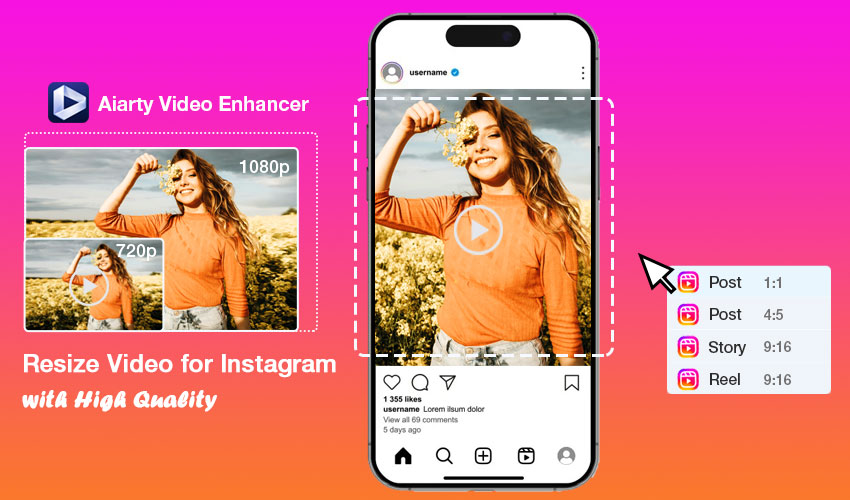
Simply resizing a video can sometimes reduce sharpness, especially when working with low-resolution or compressed footage. To prepare videos for Reels, Stories, and Feed posts while maintaining quality, you can use Aiarty Video Enhancer to resize, upscale, and enhance videos before uploading to Instagram.
Adjust Instagram video resolution and improve clarity with AI-powered enhancement!
Understanding Instagram Video Specs: Resolution, Aspect Ratio, Format, File Size & Duration
Before choosing the right Instagram video size, you need to understand the key specifications that determine video quality, compatibility, and how your content appears after uploading.
- Resolution refers to the dimensions of your video in pixels. For example, a resolution of 1080x1920 means the video is 1080 pixels wide and 1920 pixels tall. Higher resolutions generally provide sharper images, but they also result in larger file sizes.
- Aspect ratio describes the proportional relationship between the width and height of your video. Instagram supports different ratios depending on the content type—Reels and Stories work best with 9:16 (vertical), while Feed posts commonly use 1:1 or 4:5.
- Video format determines whether your video can be uploaded and played correctly on Instagram. The recommended format is MP4 with H.264 video encoding and AAC audio. Using unsupported formats or codecs may cause upload failures or quality issues after Instagram compression.
- File size is another critical factor. Instagram limits video uploads to a maximum file size, typically around 4GB. Videos that exceed this limit may fail to upload or experience additional compression, which can reduce quality. That's why Instagram ruins video quality.
- Duration limits define how long your video can be depending on where it’s posted. Reels, Stories, and Feed videos each have different maximum lengths, so choosing the right format helps avoid upload restrictions.
Understanding these Instagram video specifications helps you prepare videos with the right size, format, and quality before uploading.
Hot search: The best video format for social media >>
Instagram Video Size by Content Type (Reels, Stories, Feed & Long Videos)
Different Instagram video formats have different size, resolution, aspect ratio, and duration requirements. Choosing the correct dimensions for Reels, Stories, Feed posts, and long videos helps prevent cropping, black bars, and unnecessary quality loss after upload.
Instagram Reels Video Size and Dimensions
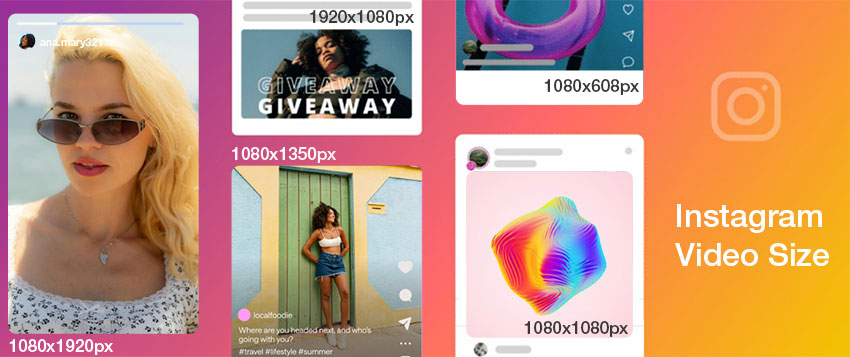
Instagram Reels are designed for full-screen vertical viewing. The recommended Instagram Reels size is 1080 x 1920 pixels with a 9:16 aspect ratio. This format fills the entire mobile screen and provides the best viewing experience.
Although Instagram supports other aspect ratios, videos that do not match the vertical format may appear cropped or leave empty space. If your video resolution does not meet Instagram requirements, you can resize videos without losing quality before uploading.
- Recommended resolution: 1080 x 1920 pixels
- Aspect ratio: 9:16 (vertical full-screen)
- Minimum resolution: 720 x 1280 pixels
- Duration limit: Up to 20 minutes
- Maximum file size: 4GB
- Cover image size: 420 x 654 pixels
Pro Tip: Keep important text, faces, and objects near the center because Instagram’s interface may cover the top and bottom areas.
Instagram Stories Video Size and Dimensions
Instagram Stories use the same vertical format as Reels, making 1080 x 1920 pixels with a 9:16 aspect ratio the ideal choice. However, Stories include stickers, captions, and interactive elements, so keeping content inside the safe zone is important.
- Recommended resolution: 1080 x 1920 pixels
- Aspect ratio: 9:16
- Minimum resolution: 600 x 1067 pixels
- Video length: Up to 60 seconds per Story
- Maximum file size: 4GB
- Safe zone: Avoid placing important content near the top and bottom edges
Tip: Keep CTAs and text away from areas covered by profile icons, captions, and interactive stickers.
Instagram Feed Video Size and Dimensions
Instagram Feed videos support multiple layouts, including square, portrait, and landscape formats. The best Instagram post size depends on how much screen space you want your video to occupy.
- Square (1:1): 1080 x 1080 pixels — A flexible option for general posts
- Portrait (4:5): 1080 x 1350 pixels — Maximizes screen space in the Feed
- Landscape (16:9): 1920 x 1080 pixels — Better for wide scenes and cinematic footage
Instagram Feed video specifications:
- Supported aspect ratios: 1.91:1 to 4:5
- Minimum resolution: 600 x 600 pixels
- Maximum duration: Up to 60 minutes depending on account and video type
- Maximum file size: 4GB
Best practice: Use 4:5 portrait videos when possible to occupy more screen space and improve mobile viewing.
Instagram Long Video Size and Duration Limits
Instagram no longer uses IGTV as a separate video format. Longer videos are now shared through Reels or Feed posts, allowing creators to upload tutorials, interviews, and longer-form content directly.
- Recommended vertical format: 1080 x 1920 pixels (9:16)
- Recommended horizontal format: 1920 x 1080 pixels (16:9)
- Supported aspect ratios: 9:16 and 16:9
- Duration limit: Depends on upload type and account eligibility
- Maximum file size: Up to 4GB
Tip: For tutorials, reviews, and educational videos, choose a resolution and aspect ratio that match where your audience will watch the content most often.
Why Instagram Videos Become Blurry After Uploading at the Right Size?
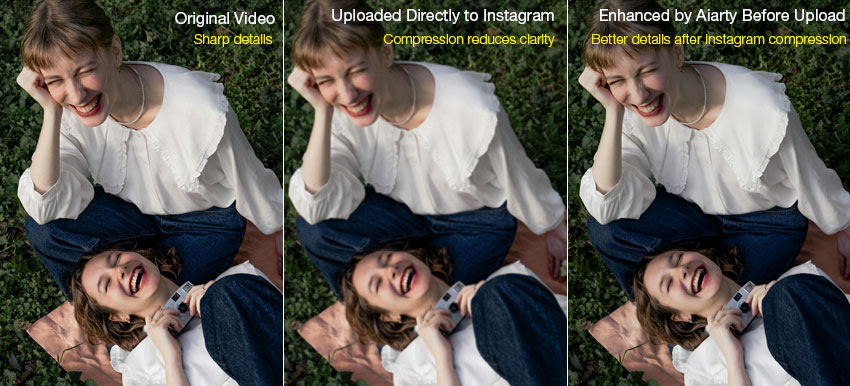
Even if your video meets Instagram’s recommended size, it may still look blurry after uploading. This usually happens because Instagram automatically compresses videos to reduce file size and improve loading speed.
Common reasons include:
- Low resolution: Videos below Instagram’s recommended resolution may lose details when stretched or compressed.
- Wrong aspect ratio: Videos that do not match Instagram’s formats may be cropped, resized, or display with unwanted black bars.
- Heavy compression: Large or already compressed videos may lose sharpness after another round of Instagram compression.
- Blurry original footage: Simply changing video dimensions cannot restore missing details from low-quality footage.
If your video is low-resolution or already compressed, resizing alone may not be enough. You may need to enhance the video quality first, then resize it to match Instagram’s recommended format.
How to Resize a Video for Instagram Without Losing Quality
Once you know the right Instagram video size, the next step is preparing your footage for upload. If your video has the wrong resolution, aspect ratio, or poor clarity, simply resizing it may not deliver the best result.
Aiarty Video Enhancer helps resize videos for Instagram while improving overall quality. It can upscale low-resolution footage, reduce noise, fix blur, and adjust video dimensions for Reels, Stories, Feed posts, and other Instagram formats.
Step 1. Open Aiarty Video Enhancer
Free download Aiarty Video Enhancer and launch it. Drag and drop any videos that don’t match Instagram’s video sizes into the workspace.
Step 2. Improve Resolution (Optional)
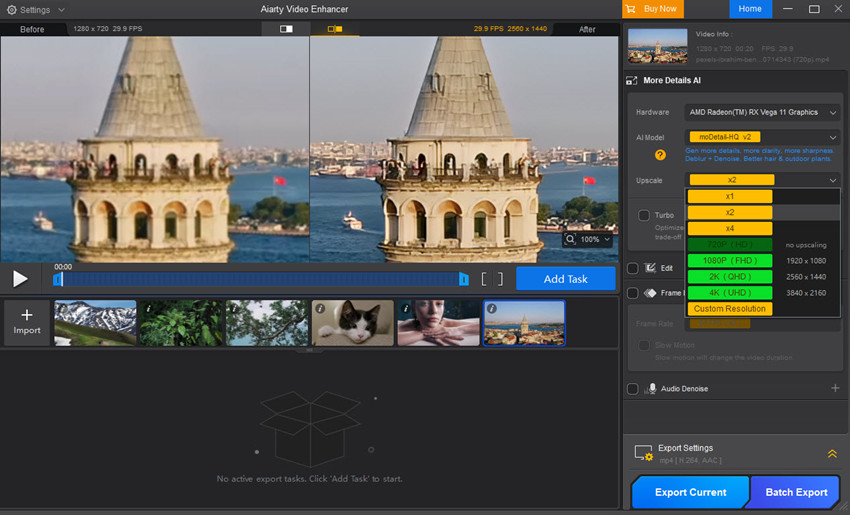
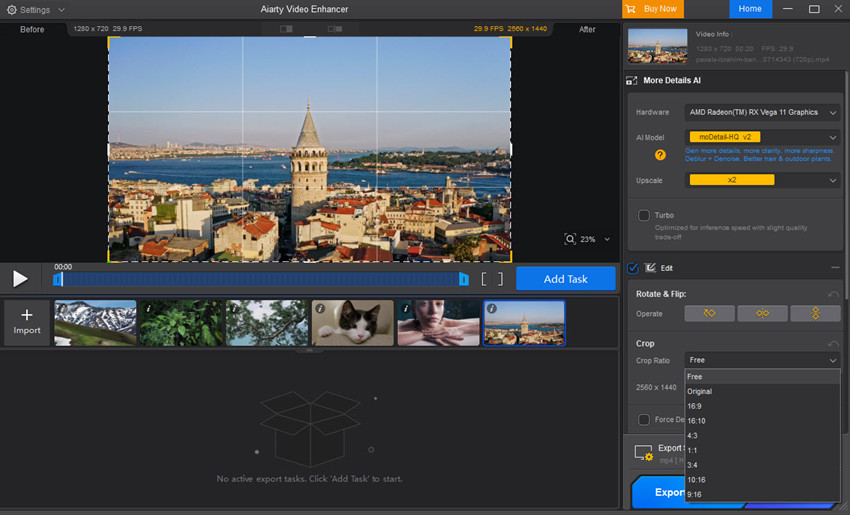
On the right panel, open the Upscale menu. If your video is below Instagram’s recommended resolution like 1080x1920, easily upscale it by selecting 2x, 4x, or set a custom resolution for sharper, clearer visuals.
Step 3. Adjust the Video Size Ratio for Instagram
Head to the Edit section and enable Adjust Crop. Choose the perfect aspect ratio for your post—9:16 for Reels/Stories, 4:5 for Feed, or 1:1 for square videos. You can also manually drag the crop box to perfectly fit your frame.
Step 4. Trim Video Length (Optional)
If needed, use the progress bar below the preview to set the start and end points. This is perfect for cutting videos to fit Instagram’s time limits or focusing only on the most engaging parts.
Step 5. Export in High Quality for Instagram
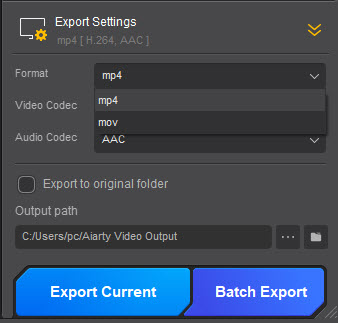
Go to Export Settings and choose MP4 or MOV—both fully supported by Instagram. Then click Export Current for a single video or Export Batch for multiple files. Aiarty will automatically resize and optimize videos for Instagram with crystal-clear quality and no compression loss.
Instagram Video Quality Tips for 2026
Choosing the right Instagram video size is the first step. To maintain the best quality after uploading, you also need to pay attention to video format, compression, framing, and export settings.

1. Export Videos in the Recommended Format
For the best compatibility, export Instagram videos as MP4 with H.264 video codec and AAC audio. Using the right format helps prevent upload issues and unnecessary quality loss caused by format conversion.
2. Upload at the Recommended Resolution
Avoid uploading low-resolution videos that Instagram needs to enlarge. For most content types, 1080p resolution provides a good balance between video quality and file size. If your original footage is blurry or too small, improve quality before uploading.
3. Keep the Correct Aspect Ratio
Use the right aspect ratio for each Instagram format. Choose 9:16 for Reels and Stories, 4:5 for Feed portrait videos, and 1:1 for square posts to avoid unwanted cropping or black bars.
4. Avoid Excessive Compression
Repeated exporting, resizing, and uploading can reduce sharpness and details. Keep your original video file whenever possible and export with suitable bitrate settings before uploading to Instagram.
5. Check Video Quality Before Uploading
Instagram applies its own compression after upload, so starting with a clear, high-quality video gives better results. For older, blurry, or low-resolution footage, consider enhancing the video before uploading.
Final Thoughts
Instagram in 2026 is all about immersive, mobile-first video experiences. To stand out in the feed or Reels tab, the right dimensions are only the beginning—you also need clarity, composition, and consistency. Here's a quick summary to keep in mind:
- Use 9:16 (1080x1920) for Stories and Reels to fill the screen and avoid black bars.
- Prefer 4:5 (1080x1350) for Feed videos to maximize visibility and screen space.
- Stick to the correct aspect ratio—cropping or padding ruins viewer experience.
- Always aim for at least 1080p resolution to ensure professional-looking clarity.
- Use Aiarty Video Enhancer to fix blurry, compressed, or low-light videos before uploading.
Don’t let compression ruin your videos—use the right Instagram sizes and enhance quality with Aiarty Video Enhancer.
Now that you're armed with the latest specs and optimization tips, it’s time to take action: create your next video using the recommended size and see the difference in engagement.
 FAQs
FAQs
Blurry uploads can be the result of low resolution, repeated re-editing, or compression during upload. To solve this, always export your video in 1080p or higher, use modern codecs like H.264, and avoid re-exporting the same file multiple times. If the source quality is poor, consider using Aiarty Video Enhancer to upscale and restore clarity before uploading.
Also Read: How to Upload High-Quality Videos to Instagram Story Without Losing Quality
Instagram now supports native 3:4 photos, so your images appear exactly as captured without cropping or stretching. Many creators are hoping the platform will also extend this to 3:4 videos in the future, making portrait-oriented video content easier to share.
Cropping usually happens when you use unsupported aspect ratios. Always refer to the sizing recommendations above. If you’re working with 16:9 footage for Reels or Stories, it will likely be cropped vertically or padded with black bars.
Most video editing apps now allow you to select export presets for Instagram. On mobile, tools like CapCut and Canva offer drag-and-drop resizing. On desktop, Premiere Pro and Final Cut let you manually set the aspect ratio and resolution. Always check the output settings before uploading.
Instagram technically supports videos up to 4K resolution, but they are often compressed during upload. To retain quality, export your video in 4K but ensure it matches the correct dimensions (e.g., 1080x1920 for Reels) and uses H.264 or H.265 encoding. Using an AI video enhancer like Aiarty Video Enhancer can help upscale to 4K before posting.
- Reels: Up to 90 seconds
- Stories: 15 seconds per segment, up to 60 seconds total
- Feed: Up to 60 seconds
- Long videos: Up to 60 minutes (for eligible accounts)
You May Also Like


This post was written by Brenda Peng who is a seasoned editor at Digiarty Software who loves turning ordinary photos into extraordinary works of art. With AI assistance for brainstorming and drafting, the post is reviewed for accuracy by our expert Abby Poole for her expertise in this field.
