


How to Unblur a Video in CapCut: 5 Ways to Fix Blurry Videos



Blurry videos can happen for many reasons, from low resolution and compression to camera shake or out-of-focus footage. If you want to improve video clarity, CapCut offers built-in tools such as AI enhancement, sharpening, adjustments, and stabilization to help make videos look clearer.
In this guide, you'll learn how to unblur a video in CapCut step by step. We'll also explain when CapCut may not be enough and when a dedicated AI video enhancer like Aiarty Video Enhancer can help improve heavily blurred or low-quality footage.
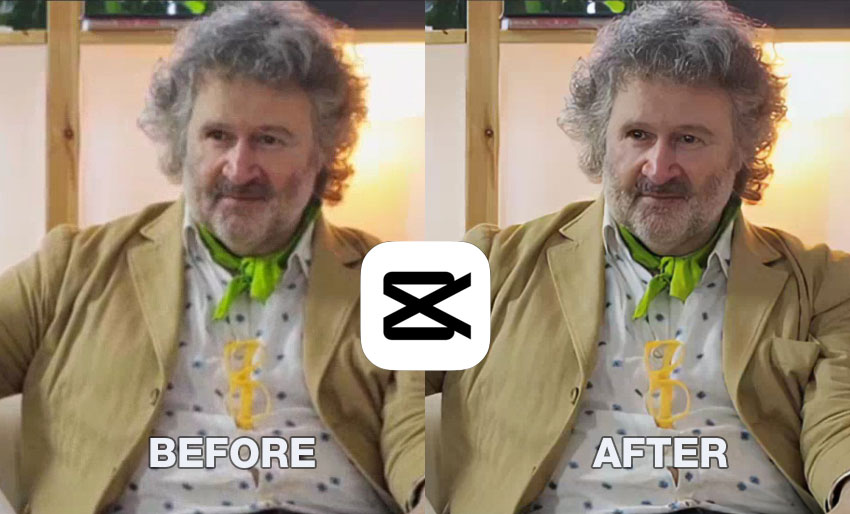
How to Unblur A Video in CapCut
CapCut provides several built-in tools that can help make blurry videos look clearer, including AI video enhancement, sharpening, manual adjustments, stabilization, and high-quality export settings. However, these tools work best for slightly blurry, low-resolution, or compressed videos rather than severely out-of-focus footage.
Depending on your device, you can try to improve video clarity using CapCut on mobile app, desktop, or online browser versions. The available features and interface may vary slightly across platforms, but the overall workflow is similar: import your blurry video, apply enhancement tools, adjust clarity settings, and export the improved result.
Below are the main methods to unblur a video in CapCut:
1. Use CapCut AI Video Upscaler to Enhance Video Quality
If your video looks blurry because of low resolution, compression, or missing details, CapCut's AI Video Upscaler can help improve overall clarity. Unlike simple sharpening, AI upscaling enhances video resolution while improving details and reducing softness.
CapCut's AI video enhancement tools are available across different versions, but the exact location may vary between mobile, desktop, and browser versions.
On Desktop (recommended)
- Open CapCut Desktop and import your blurry video into a new project.
- Select the video clip and look for AI enhancement or video quality improvement options.
- Enable Enhance quality or AI upscaling to improve resolution and restore clearer details.
- Choose the desired enhancement level or output resolution, such as HD, UHD, or 4K.
- Preview the result and export the enhanced video in high quality.
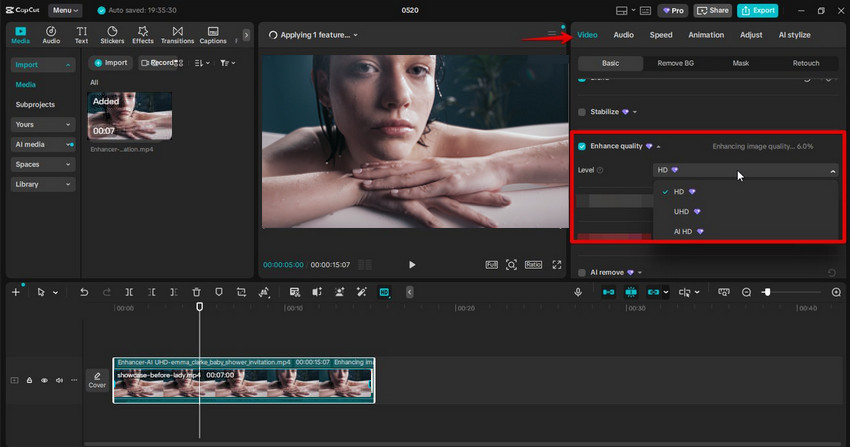
On mobile or CapCut Online, look for similar options such as AI Enhance, Enhance quality, or Upscale depending on your version.
While CapCut's AI enhancement can improve slightly blurry or low-resolution videos, extremely blurred footage may still lack recoverable details. When important details such as faces, text, or fine textures are lost, a dedicated AI video enhancer may provide better restoration results.
Unlike traditional sharpening that only increases edge contrast, AI video enhancement can analyze video frames and reconstruct missing details, helping improve clarity, reduce noise, and upscale low-quality footage. For videos that remain blurry after CapCut adjustments, Aiarty Video Enhancer provides an advanced solution with AI-powered deblurring, denoising, and upscaling capabilities.
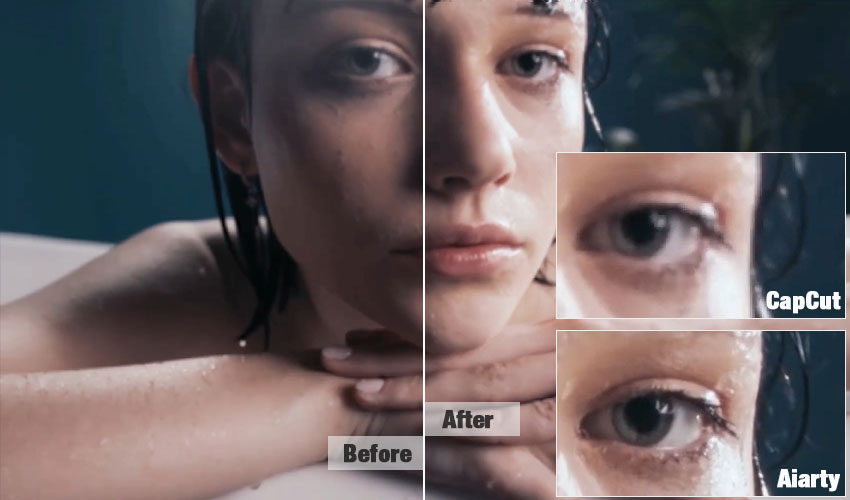
2. Apply Sharpen Effect to Improve Video Clarity
CapCut's Sharpen effect can help make slightly blurry videos appear clearer by enhancing edges and improving perceived details. This method works best for soft footage caused by compression, low resolution, or mild focus issues. However, increasing sharpness too much may introduce noise or make the video look unnatural.
Using the Sharpen Effect:
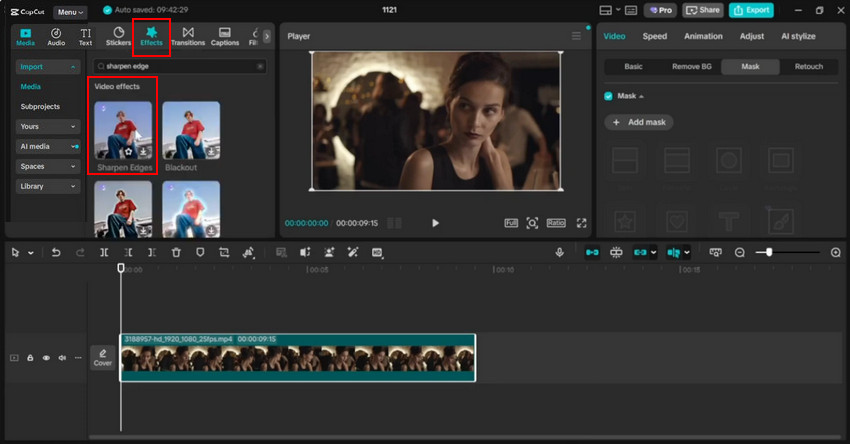
- Open your CapCut project and select the video clip in the timeline.
- Go to Effects and choose Video Effects.
- Find the Sharpen or similar sharpening effect and apply it to your clip.
- Adjust the sharpening intensity gradually until the video looks clearer without excessive noise or harsh edges.
3. Adjust Sharpness, Contrast, and Brightness
CapCut's Adjust tool provides more control over video clarity by allowing you to fine-tune sharpness, contrast, and brightness settings. This method is useful for slightly blurry or low-quality videos where details are still visible but appear soft or unclear.
To improve video clarity with the Adjust tool:
- Select your video clip in the timeline and open the Adjust panel.
- Increase the Sharpen slider slightly to make edges and details appear clearer.
- Adjust Contrast to improve separation between light and dark areas and make details stand out.
- Fine-tune Brightness if the footage looks too dark or overexposed after adjustments.
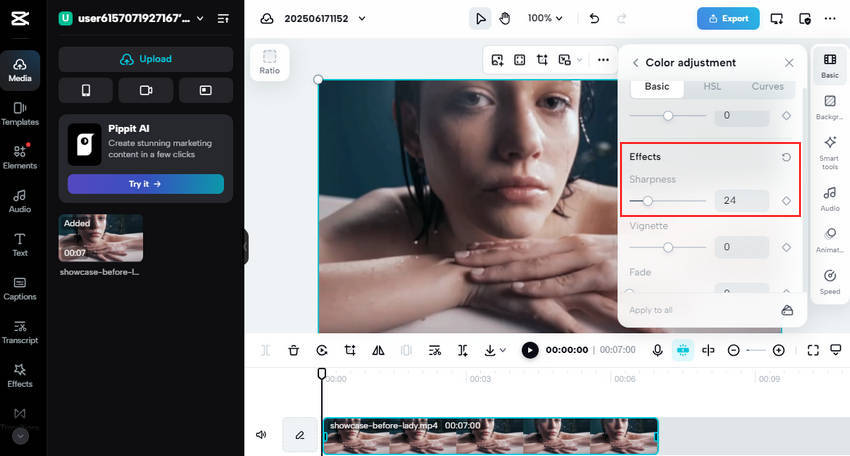
Make small adjustments gradually and avoid excessive sharpening, as it may create unnatural edges or amplify noise. For severely blurred videos where details are already lost, CapCut adjustments may have limited results.
4. Export Video with Higher Quality Settings
Sometimes a video may look clear while editing but become blurry or pixelated after exporting. This usually happens because of low export resolution or excessive compression. Before saving your final video, check CapCut's export settings to preserve as much quality as possible.
Check your export settings:
- Click Export after finishing your edits.
- Choose a higher Resolution, such as 1080p or 4K, if supported by your original footage and device.
- Select an appropriate Frame Rate, such as 30fps or 60fps, to maintain smoother video quality.
- Avoid unnecessary compression settings that may reduce sharpness and introduce pixelation.
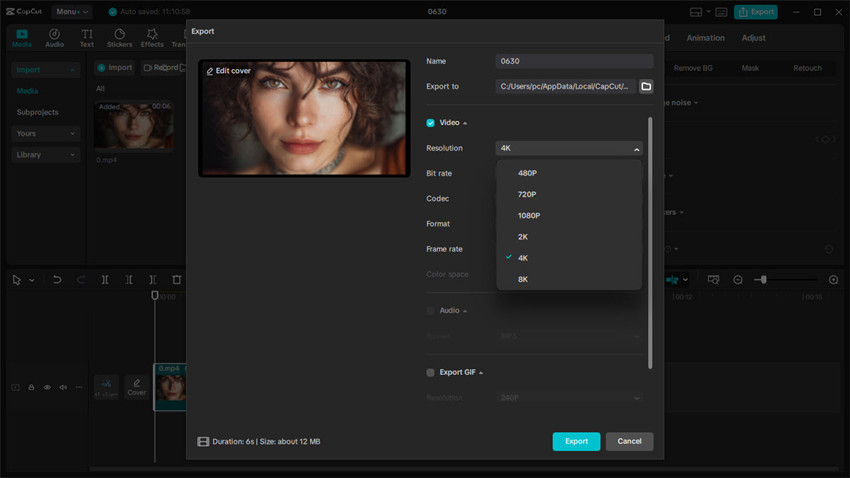
Keep in mind that higher export settings can help preserve existing details, but they cannot restore details that were already lost in a heavily blurred video.
Use Stabilization for Motion Blur (Optional)
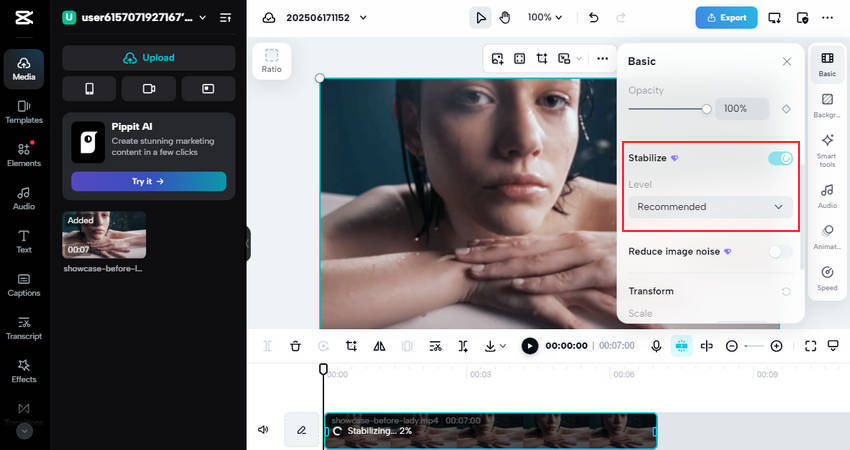
If your video looks blurry because of camera shake, CapCut's Stabilize feature can help reduce unwanted movement. CapCut will analyze your footage and attempt to smooth out unwanted motion, which can significantly reduce motion blur and jitter, making the video much more watchable. It's worthy noting that this feature is exclusively available to Pro users.Moreover, stabilization mainly corrects shaky footage rather than restoring lost details.
Why Do Videos Get Blurry?
If your video still looks blurry after trying CapCut's enhancement tools, the cause may be related to the original footage quality rather than the editing process. Understanding why a video becomes blurry can help you choose the right solution and determine whether basic editing tools are enough or if you need a more advanced AI video unblurring tool.
Here are the most common reasons why videos lose clarity:
- Low resolution or compression: Low-resolution recordings, repeated uploads, or platform compression can remove details and make videos appear soft, blurry, or pixelated.
- Out-of-focus recording: If the camera does not focus correctly on the subject, important details may appear blurred and difficult to recover.
- Motion blur or camera shake: Fast movement, unstable shooting, or slow shutter speeds can create motion blur that reduces video sharpness.
- Low-light conditions: Videos recorded in poor lighting often contain more noise and fewer visible details, making the footage look less clear.
Can CapCut Really Remove Blur from a Video?
CapCut can help improve the appearance of a blurry video through tools like sharpening, AI enhancement, color adjustments, and stabilization. These features work well for slightly soft footage, low-resolution clips, or videos affected by compression.
However, CapCut has limitations when dealing with severely blurred videos. Traditional editing tools can enhance visible details, but they cannot fully:
- Recover pixels that are missing from the original footage.
- Reconstruct fine details that have already been lost.
- Restore heavily blurred or out-of-focus videos to their original quality.
If your video still looks blurry after applying CapCut's enhancement tools, especially when faces, text, or important details are unclear, an AI video enhancer designed for detail restoration may provide better results.
Aiarty Video Enhancer: The AI Alternative for Real Video Unblurring
CapCut's built-in tools can improve slightly blurry videos through sharpening, AI enhancement, adjustments, and stabilization. However, these methods mainly enhance existing details and may have limited results when dealing with heavily blurred, compressed, low-resolution, or out-of-focus footage.
For more challenging cases, Aiarty Video Enhancer provides an AI-powered solution for Windows and Mac. Instead of relying only on traditional sharpening, it uses advanced AI models to analyze video frames, improve clarity, reduce blur and noise, enhance details, and upscale low-quality videos up to 4K with more natural-looking results.
Here's how Aiarty Video Enhancer helps improve blurry videos:
- AI Deblurring & Detail Enhancement: Aiarty analyzes video frames to improve clarity, enhance textures, and make details more visible in blurry or degraded footage. It is especially useful for old videos, compressed clips, and low-quality recordings.
- AI Upscaling up to 4K: Enhance low-resolution videos by increasing resolution while improving overall sharpness and visual quality, making them suitable for modern displays and larger screens.
- AI Denoising for Cleaner Results: Reduce grain, compression artifacts, and noise while maintaining natural-looking details, especially for low-light or older footage.
- Flexible AI Models & Local Processing: Choose AI models based on different video conditions and process footage locally on your computer without uploading files.
How to Unblur a Video with Aiarty Video Enhancer
Step 1. Download Aiarty Video Enhancer and Import Your Blurry Video
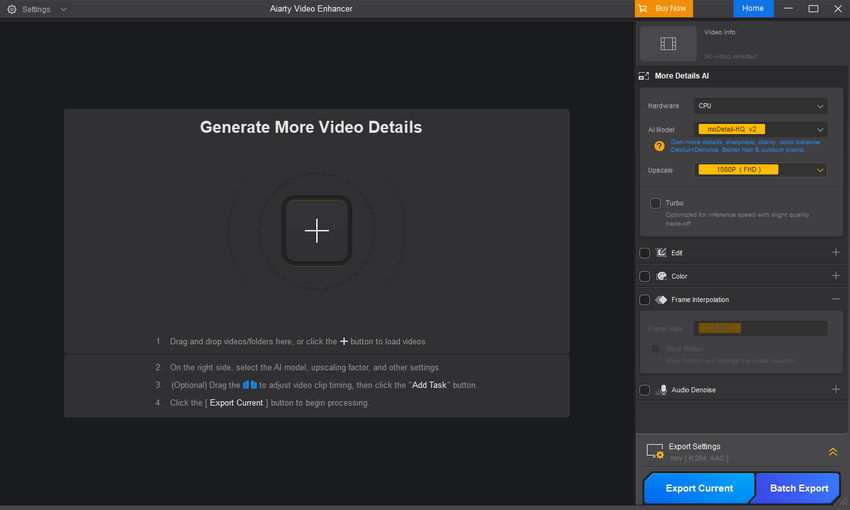
Download and install Aiarty Video Enhancer on your Mac or Windows computer. Launch the program, then import your blurry video by dragging and dropping the file into the interface or using the import option.
Step 2. Select an AI Model for Your Video
Choose an AI model based on your video condition. moDetail-HQ is suitable for footage where you want to enhance textures and recover more details. Smooth-HQ focuses on natural-looking restoration, while superVideo HQ works well for noisy, low-light, or heavily degraded videos.
You can preview different models and adjust settings to find the best balance between clarity and natural results.
Step 3. Adjust Enhancement and Upscale Settings
Choose your preferred upscale option, such as 2×, 4×, or output resolutions including 1080p, 2K, and 4K. If your computer supports GPU acceleration, enable Turbo Mode for faster processing.
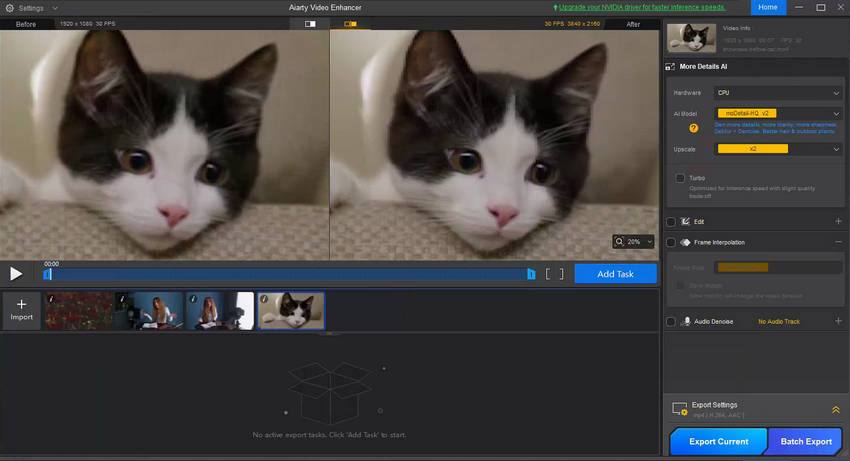
Step 4. Preview and Export the Enhanced Video
Before exporting, use the side-by-side preview to compare the enhanced result with the original footage. After adjusting the settings, click Export current or Batch Export to save your improved video.
Final Thoughts
If you’re trying to unblur a video on CapCut, there are solid tools available—but don’t expect miracles. For more advanced restoration, especially on Mac or PC, Aiarty Video Enhancer offers one-click AI enhancement that can truly fix blurry video and improve video quality beyond what filters can do. With features like real-time GPU processing, true upscaling, and powerful AI models, Aiarty is the best AI video enhancer for Mac and PC when clarity matters most.
 FAQs
FAQs
To unblur a video in CapCut, you can use tools such as AI enhancement, Sharpen, Adjust, and Stabilize. Increase sharpness gradually, fine-tune contrast and brightness, then export the video with higher quality settings. However, these methods work best for slightly blurry videos and may not fully restore heavily blurred footage.
CapCut can reduce the appearance of blur by enhancing sharpness, adjusting contrast, and improving video quality. However, it cannot fully recover missing pixels or reconstruct details that are already lost due to severe blur, low resolution, or out-of-focus footage.
CapCut offers AI-powered video enhancement tools that can improve video clarity and upscale lower-quality footage. However, AI enhancement has limitations when the original video contains severe blur or missing details. For more advanced restoration, a dedicated AI video enhancer may provide better results.
To fix pixelated videos in CapCut, try increasing video quality with AI enhancement, adjusting sharpness and contrast, and exporting at a higher resolution such as 1080p or 4K. Keep in mind that increasing resolution cannot fully restore details that were not captured in the original footage.
A CapCut video may become blurry after export because of low resolution, compression, or unsuitable export settings. To maintain quality, choose a higher export resolution, use an appropriate frame rate, and avoid excessive compression when saving your final video.
You May Also Like


This post was written by Brenda Peng who is a seasoned editor at Digiarty Software who loves turning ordinary photos into extraordinary works of art. With AI assistance for brainstorming and drafting, the post is reviewed for accuracy by our expert Abby Poole for her expertise in this field.
