


Why Is Twitter Video Quality So Bad? (How to Upload HD Videos That Stay Sharp)



Quick Takeaways: Why is Twitter Video Quality So Bad?
Twitter (X) reduces video quality mainly due to compression, bitrate limits, resolution restrictions, and adaptive streaming for different devices and network conditions. Even high-quality uploads are re-encoded, which can cause blurriness or detail loss. To fix it:
- Upload videos in 1080p (not 4K)
- Use H.264 codec with optimized bitrate
- Keep file size under platform limits
- Pre-enhance video quality before uploading
You spent time capturing a perfect video, but after uploading it to Twitter (X), it looks blurry, pixelated, and just plain bad. This is a common frustration that leads many users to ask: why is Twitter video quality so bad? The reason comes down to the trade-off between file size, server costs, and speed. Twitter is designed for fast loading and accessibility at scale, which means every uploaded video is compressed and re-encoded, often reducing visual quality.
This guide will explain the technical reasons behind the quality loss and provide a comprehensive, step-by-step solution on how to fix Twitter video quality and upload high quality videos to Twitter.
Why Are Twitter (X) Videos Blurry and Low Quality? [7 Reasons Explained]
Quick Takeaways: 7 Reasons Twitter Videos Lose Quality
Twitter (X) videos often look blurry or low quality due to:
- Aggressive compression and re-encoding
- Low bitrate and resolution limits
- File size and duration constraints
- Mismatched aspect ratios and scaling
- Adaptive playback based on network conditions
- Improper upload settings
- A mobile-first platform design
Twitter's aggressive video compression is the primary reason behind a frustrating problem for many content creators: videos that look blurry, pixelated, and low-quality after being uploaded. This isn't an issue with your original file; it's a direct result of Twitter's system prioritizing speed and accessibility over visual fidelity. To truly understand and solve the problem, you need to know what's happening to your video behind the scenes. Here are the 7 main reasons why Twitter videos lose their quality.
1. Aggressive Compression and Re-encoding
Twitter re-encodes every uploaded video at a lower bitrate, which significantly reduces detail and sharpness.
When you upload a video, Twitter does not keep the original file. Instead, it processes and converts your video into a standardized format optimized for streaming. This re-encoding process removes a large amount of visual data, similar to making a compressed copy of a high-quality image. As a result, fine textures, edges, and details are often lost.
2. Bitrate and Resolution Limitations
Twitter reduces video bitrate to a much lower level, causing major quality loss even in high-resolution videos.
Twitter X has strict limitations on the videos it accepts. While it supports resolutions up to 1920x1200, the platform's bitrate is very low. A high-quality 1080p video from your camera might have a bitrate of 20-50 Mbps (megabits per second), but Twitter will re-encode it down to just a few Mbps. This drastic reduction in bitrate is where most of the visual quality is lost, leading to blocky artifacts and blurriness, especially in videos with fast motion or intricate details.
3. File Size and Duration Constraints
Twitter enforces file size and duration limits, which contribute to additional compression.
Videos must be under 512 MB and no longer than 140 seconds. While these limits might seem generous, they are part of the ecosystem that prioritizes fast loading over quality. If your video exceeds these limits, it will either be rejected or further compressed, making a bad situation worse.
4. Mismatched Aspect Ratios / Resolutions
Non-standard video dimensions force Twitter to rescale your video, reducing sharpness.
If your video uses unusual resolutions (such as 1234×700) or includes black bars, Twitter may apply additional scaling during processing. This resizing can introduce blur and reduce clarity, making the final video appear softer than the original.
5. Video Playback Environment
Twitter dynamically lowers video quality based on internet speed and device performance.
Twitter adapts video quality to your internet connection. Slow connections trigger lower quality streams, making Twitter videos look blurry even if the original upload was sharp. So check if you have data saver or lower quality settings enabled.
6. Upload Settings Matter
Uploading from mobile vs desktop can produce different results. Mobile uploads often default to lower resolution to save data. To avoid bad or blurry Twitter videos, use MP4/H.264 with AAC audio is best, but improper encoding settings can trigger additional compression.
7. A Mobile-First Design Philosophy
Twitter X was built for a mobile-first world. The platform is designed to be consumed on small screens, often with inconsistent data connections. Therefore, video quality is sacrificed for instant loading and a smooth scrolling experience. The system is not optimized for viewing high-resolution, full-screen video on a large desktop monitor.
How to Make Twitter (X) Video Quality Better [5 Fixes]
Quick Takeaways: 5 Ways to Improve Twitter Video Quality
Even though you cannot bypass Twitter's compression entirely, you can take steps to ensure your videos remain sharp and detailed after upload:
- Use the highest quality source file
- Follow Twitter's recommended video settings
- Match the correct aspect ratio
- Pre-optimize your video before uploading
- Upload with a stable internet connection
Uploading a high-quality video to Twitter (X) doesn’t guarantee it will stay sharp. Twitter compresses and re-encodes all videos to optimize speed and playback on multiple devices. This often causes videos to appear blurry, pixelated, or soft. The good news is that by following the fixes below, you can maximize visual quality and reduce the impact of compression.
1. Start with the Highest Quality Source File
The "garbage in, garbage out" principle applies here. Always upload your video to Twitter X with the highest quality possible. Your original file should have a high bitrate, be shot at a high resolution (1080p or higher), and have no pre-existing compression artifacts.

2. Follow Twitter Best Quality Settings
The best way to avoid low-quality video on Twitter X is to provide a video that is already close to the platform's final specifications. By following these best Twitter video quality settings, you'll give Twitter X a cleaner file to work with.
- Format and Codec: Use MP4 with the H.264 video codec and AAC audio codec.
- Resolution and Frame Rate: A resolution of 1280x720 is often the sweet spot. While Twitter supports 1920x1080, uploading a high-bitrate 1080p video can lead to harsher compression. Keep your frame rate at 30fps or 60fps.
- Bitrate: Aim for a bitrate of around 5-10 Mbps for 1080p video. This gives you control over the compression before Twitter takes over.
3. Resize for Twitter Video Aspect Ratio
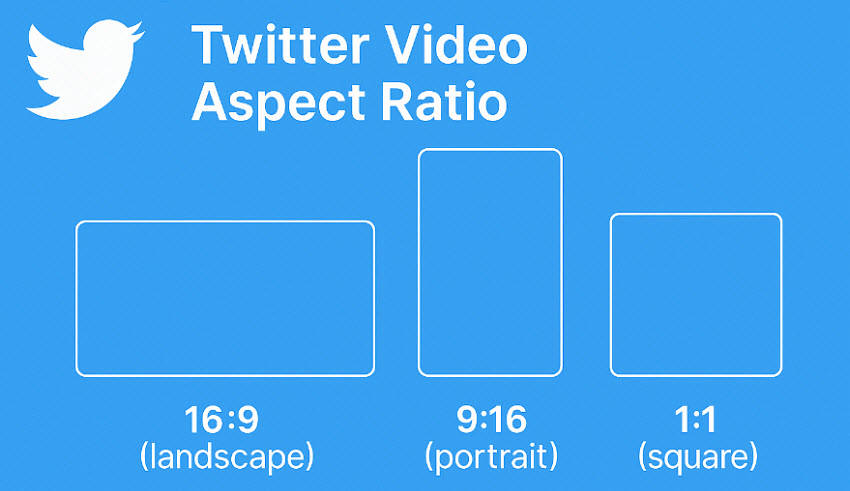
Ensure your Twitter video's aspect ratio is correct to avoid black bars or stretching. The recommended Twitter video aspect ratioS are 16:9 for widescreen and 1:1 for square videos. Odd aspect ratios can trigger additional re-encoding processes, further degrading quality.
4. Optimize Your Video for Twitter X Before Uploading
You can optimize video for Twitter X by pre-processing it with a video editor before you upload. This step is crucial for achieving high-quality videos on Twitter X.
- Remove Noise: Digital noise and grain are often mangled by compression. Use a noise reduction filter to clean up your footage before exporting.
- Subtle Sharpening: A subtle sharpening effect can help details survive the compression process, but be careful not to overdo it.
- Export with the Right Settings: Use your video editor to export the video with the recommended settings listed above. This is the most effective way how to upload high quality videos to Twitter and gain some control over the final output.
Also learn: how to change video quality on iPhone
5. Upload with a stable connection.
Your internet connection can have a significant impact on your final video quality. When you upload a video, a stable connection ensures the file is sent to Twitter's servers in a single, uninterrupted stream. If your connection is unstable or drops, the upload can be interrupted. This may force Twitter's servers to either retry the upload or, in some cases, process a partially corrupted or incomplete file. This can lead to lower quality of your Twitter videos. So always ensure a strong and stable connection in order to upload high quality videos to Twitter.
[Steps] How to Fix Low-quality Videos on Twitter X
Twitter compresses every video you upload, making even good footage look soft, dark, noisy, and pixelated. If you want your videos to stay sharp even after Twitter’s compression, just try Aiarty Video Enhancer. It will easily optimize videos for Twitter in the perfect quality and settings:
- AI Upscale to 1080p/4K: Turn low-resolution 480p/720p clips into sharp, detailed HD or 4K videos.
- Remove Blur, Noise & Pixelation: Prevent Twitter from amplifying grain, motion blur, and blocky artifacts.
- Fix Night & Low-Light Footage: Improve exposure, clarity, and color so your video doesn’t look muddy or dull.
- Color Repair for Vibrant Posts: Improve contrast and saturation so your video stays eye-catching after compression.
- Perfect Twitter Aspect Ratios (16:9/1:1/9:16): Avoid awkward cropping and quality loss caused by wrong sizing.
- Optional Frame Interpolation (30 to 60/120 fps): Smooth motion for gaming, sports, POV, and dynamic videos.
Result: You upload a clean, crisp video that survives Twitter’s heavy compression and stays sharp on every device.
How to Fix Bad Quality Videos on Twitter X Using Aiarty Video Enhancer
Step 1. Download and launch Aiarty Video Enhancer. Drag your low-quality or blurry Twitter X video files directly into the main interface.
Step 2. Choose the right AI model to restore and fix bad quality videos on Twitter.
Step 3. Select your target resolution from the Upscale menu. Choose 3840×2160 for full 4K output, or go with 2×/4× upscaling based on your original resolution.
Step 4. Click Preview to check the side-by-side comparison of the original and enhanced video in real time. When you’re satisfied with the result, export the enhanced Twitter videos.

Conclusion
In conclusion, while Twitter's aggressive video compression can be frustrating, understanding the reasons behind it and implementing the right optimization techniques can significantly improve the visual quality of your X uploads. By adhering to the recommended Twitter video quality settings, pre-processing your video for noise and sharpness, and considering AI-powered enhancement tools like Aiarty Video Enhancer for challenging footage, you can overcome many of the limitations and ensure your content looks its best on the platform. Don't let blurry videos diminish your message – take control of your Twitter X video upload quality today.
 FAQs
FAQs
The primary reason why Twitter video quality is so bad is the platform's aggressive compression. To handle a massive volume of content and ensure videos load quickly on any network, Twitter X re-encodes every video to a very low bitrate. This process strips away a significant amount of data, resulting in a loss of sharpness and clarity.
To make Twitter video quality better, you should provide a highly optimized source file. This involves using a video editor to pre-process your video according to Twitter video quality settings before uploading. A clean, properly-formatted source video gives Twitter's compressor less "junk" to work with, leading to a much better final result.
Twitter x does allow you to upload 4K videos, but they will still be compressed. You won't see the original 4K quality on the platform. The best strategy for how to upload high quality videos to Twitter X, even if they start at 4K, is to export them to the recommended 1080p format with optimal settings. This gives you more control over the quality before Twitter's final compression.
Your videos might not appear in HD because of your network connection. Twitter often delivers a lower-resolution version of a video to prevent buffering on slow or unstable connections. Even if your video was uploaded in HD, it may only appear as a lower resolution on your device if your internet speed is poor.
The most effective way to fix Twitter X video quality is to optimize video for Twitter before uploading. This means adjusting your video's bitrate, codec, and resolution to match the platform's specifications. By doing this, you perform the compression yourself, giving Twitter a file that requires less destructive re-encoding.
Your videos look blurry on Twitter X because of a combination of factors, all stemming from compression. The loss of data during re-encoding removes fine details and introduces artifacts, causing a fuzzy or pixelated appearance. This is the main reason why are my Twitter videos blurry after a successful upload.
The recommended Twitter video quality settings are:
- Format: MP4
- Codec: H.264
- Resolution: 1280x720 is ideal.
- Frame Rate: 30 or 60 fps.
- Aspect Ratio: 16:9, 1:1, or 9:16 are supported.
You can't directly adjust the quality of a video once it's on Twitter X. However, you can manage the twitter video upload quality by using a video editor to control the file before it's uploaded. By doing so, you can set the bitrate, resolution, and other parameters to give the platform the best possible starting file, which ultimately improves the final look of your video.
You May Also Like


This post was written by Brenda Peng who is a seasoned editor at Digiarty Software who loves turning ordinary photos into extraordinary works of art. With AI assistance for brainstorming and drafting, the post is reviewed for accuracy by our expert Abby Poole for her expertise in this field.
