


Summary: Here you will learn about everything about HitPaw Video Enhancer (now named HitPaw VikPea), its features, performance, how-to guide, pros & cons, and also alternatives. And if you feel intrested into its alternatives, Aiarty Video Enhancer would be the best option.
If you've ever shot a video on your phone or camera, only to find it plagued by blur, noise, or washed-out colors, you're not alone. As someone who's spent years behind the lens and in front of editing software, I know the heartbreak of a great moment lost to poor video quality. That's where tools like HitPaw Video Enhancer- now rebranded as HitPaw VikPea - promise to step in and save the day.
But does this AI-powered video enhancer actually deliver on its bold claims? Or is it just another flashy app lost in a sea of video tools? In this review, I'll take you on a hands-on tour of HitPaw VikPea, breaking down its features, performance, and real-world usability. Let's find out together now.

What Is HitPaw Video Enhancer (HitPaw VikPea)?
HitPaw VikPea, formerly known as HitPaw Video Enhancer, is an AI-powered video enhancement and generation software for Windows and macOS. It uses specialized AI models to upscale low-resolution videos, reduce noise, restore facial details, improve low-light footage, and enhance overall video quality. Beyond video enhancement, VikPea also integrates AI video generation and other creative tools, offering both local and cloud-based processing options for different workflows.
Key Features of HitPaw Video Enhancer
What exactly sets VikPea apart in the ever-growing crowd of video enhancement software? Let's break it down.
- AI Video Upscaling: Upscales low-resolution videos to higher resolutions, helping improve clarity and recover visible details.
- AI Video Denoising: Reduces noise and grain while retaining important visual details.
- AI Face Enhancement: Improves facial clarity and restores facial details in low-quality footage.
- Low-Light Enhancement: Improves visibility, brightness, and detail in dark or poorly lit videos.
- AI Video Generation: Creates videos from text prompts or reference materials using integrated AI models.
- Other AI Tools: Includes frame interpolation, video stabilization, colorization, and additional video processing features.
How Well Does HitPaw VikPea Enhance Videos?
HitPaw VikPea offers several AI models for improving video quality, but how much difference do they make in actual footage? To find out, we tested its video upscaling, low-resolution video enhancement, and denoising capabilities using different types of source videos. We compared the results before and after processing, focusing on detail recovery, image clarity, noise reduction, and the preservation of natural textures.
Video Denoising Test
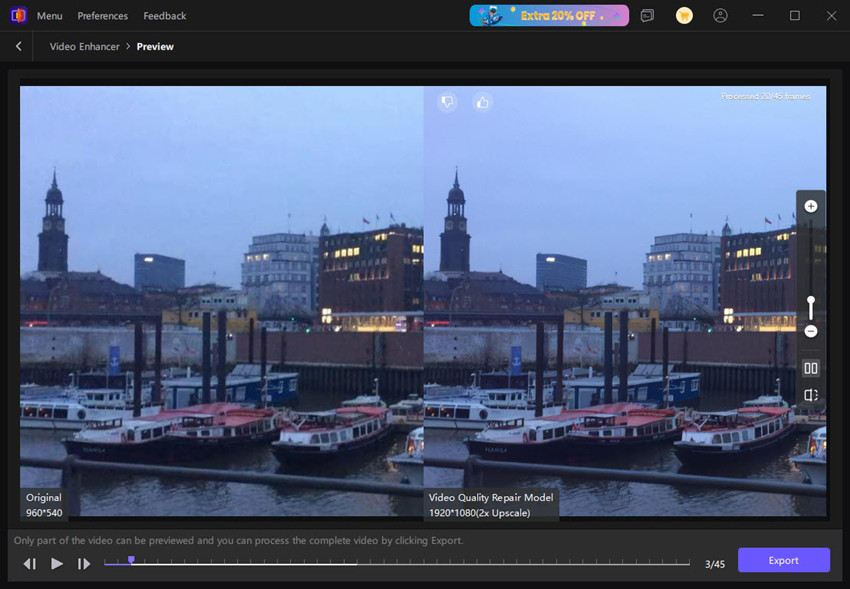
The first test used a 960 × 540 video with noticeable noise and visible quality issues. We selected VikPea's Video Quality Repair Model and set the upscaling factor to 2×.
After processing, most of the visible noise was removed, while the video retained a reasonable amount of detail. The result looked cleaner without excessive smoothing, showing that the model can handle footage affected by both noise and general quality degradation.
Low-Resolution Video Enhancement Test
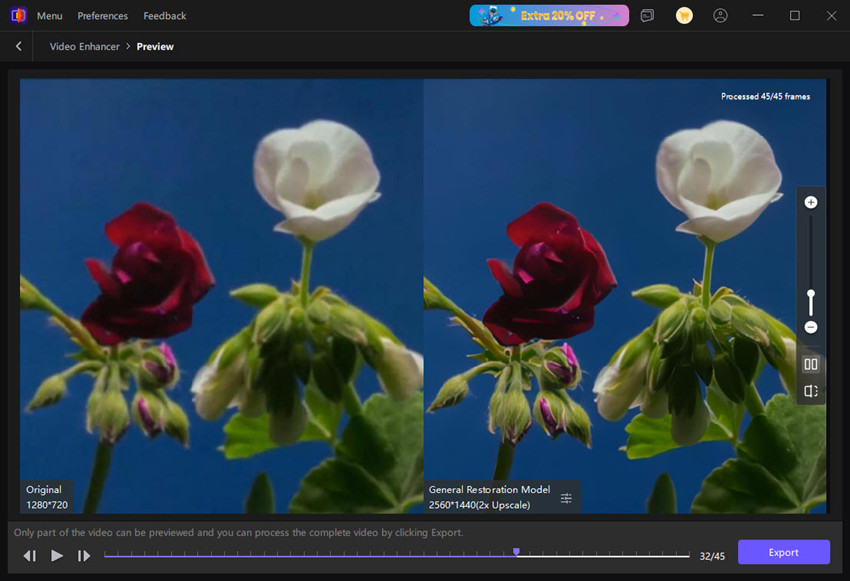
For the second test, we used a low-resolution 120 × 720 video and applied VikPea's General Restoration Model with 2× upscaling.
The processed video showed a noticeable improvement in overall clarity compared with the original. Some visual details became easier to distinguish, although the extent of detail recovery naturally depends on the quality of the source footage.
Processing Speed: How Fast Is HitPaw VikPea?
Now, let's talk about speed. AI video processing is notoriously resource-hungry, and VikPea is no exception.
- Face Model vs. Animation Model: In my tests, the Face Model processed a 2-minute 1080p clip in about 3 minutes on a mid-range laptop (Intel i7, 16GB RAM, NVIDIA RTX 3060). The Animation Model, which is more complex, took closer to 7 minutes for the same length and resolution.
- Resolution Matters: 4K videos? Buckle up. Processing times can double or triple, especially for models like Detail Recovery or SDR to HDR. A 2-minute 4K video took nearly 15 minutes to enhance with the Animation Model.
- User Experience: The good news is, VikPea's interface keeps you in the loop with progress bars and estimated times. You can preview changes before committing to a full export, saving time and frustration.
- Convenience: Batch processing is supported, but expect your PC to work up a sweat. For best results, close other heavy apps and let VikPea do its thing.
HitPaw VikPea Pricing: How Much Does It Cost?
HitPaw VikPea offers monthly, yearly, and perpetual licenses for individual users. Here are the current promotional prices listed on its official Windows purchase page:
- 1-Month License – $42.99: A monthly subscription with automatic renewal, providing access to paid features during the subscription period.
- 1-Year License – $99.99: An annual subscription with automatic renewal. It includes major version upgrades while the subscription remains active.
- Perpetual License – $349.99: A one-time payment for permanent access to the licensed version, including updates within the current major version. Future major-version upgrades are not automatically included.
One thing to consider is that a paid VikPea license does not necessarily include unlimited AI usage. Some AI video generation, cloud processing, and other credit-based services may require additional AI Credits. The free version also has export restrictions, so you should check the available previews and export conditions before purchasing.
The perpetual plan avoids recurring license payments, but its relatively high upfront cost may not be worthwhile if you only need occasional video enhancement. Your actual long-term cost also depends on how frequently you use credit-based features.
How to Use HitPaw Video Enhancer: Step-by-Step Tutorial
Step 1. Downloading and Installing the Software
Getting started with HitPaw VikPea is refreshingly simple. Head over to the official HitPaw website and download the latest version for your operating system—Windows or macOS.
Step 2. Importing Your Video Files
Launch VikPea and drag and drop your video into the main interface, or click the Import button to browse for files. You can also add multiple videos for batch processing.

Step 3. Selecting the Right AI Enhancement Model
Select an AI model based on your footage and the type of improvement needed. For example, use Face Enhancement for portraits, Animation models for cartoons, Video Quality Repair for general quality issues, or Low-Light Enhancement for dark footage. The available models and options may vary by version.

Step 4. Previewing Enhancements
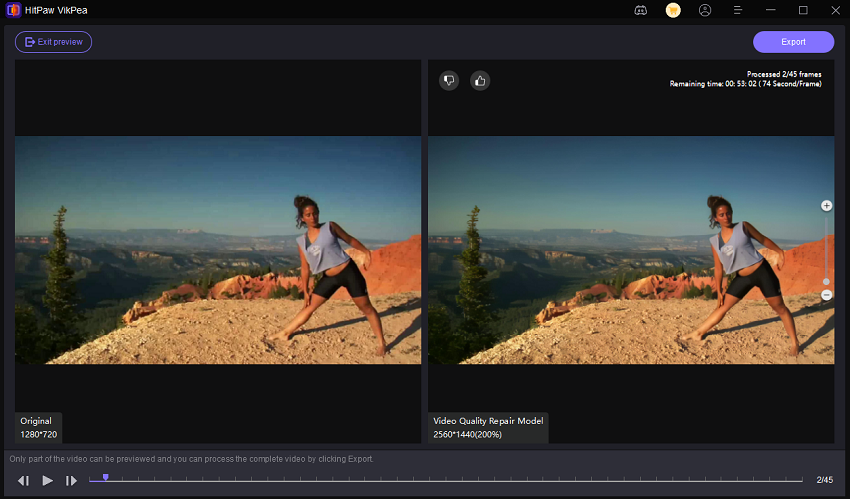
Use the Preview function to compare the original and enhanced footage. Adjust the available settings or try another model if the results need further refinement.
Step 5. Exporting the Final Video
When you're satisfied with the result, click Export to choose the output format, resolution, and destination folder. Processing time varies depending on the source video, selected model, output settings, and hardware. VikPea also supports batch export.
Alternatives to HitPaw Video Enhancer
1. Aiarty Video Enhancer
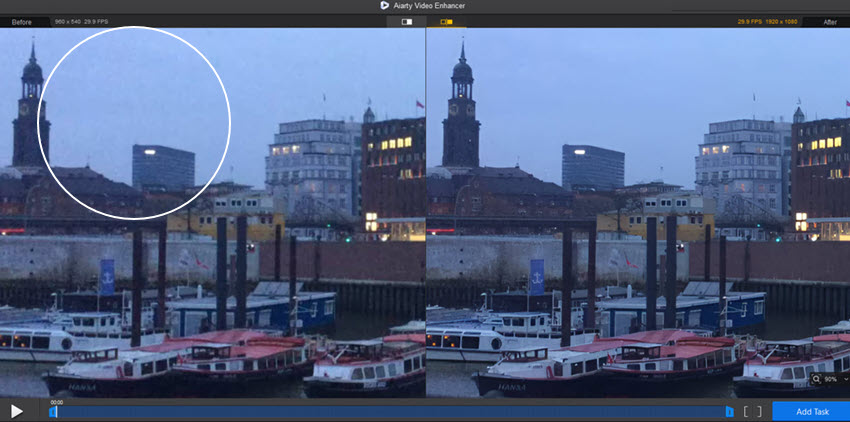
If you're considering HitPaw VikPea but mainly need to improve existing videos rather than generate new ones, Aiarty Video Enhancer is an alternative worth looking at. It focuses on AI-powered video upscaling, denoising, deblurring, and detail recovery, with all enhancement processing performed locally on your computer.
Aiarty combines diffusion- and GAN-based AI models to handle different types of footage, including noisy recordings, blurry clips, old videos, and animation. Instead of relying on a broad set of AI creative tools, it concentrates on improving the visual quality of existing footage.
Key Features
- AI Video Upscaling: Upscale videos by 2× or 4×, or use custom scaling options to improve resolution and recover visible details, with output support up to 4K.
- Denoising and Deblurring: Reduce noise, grain, and blur while retaining natural-looking details.
- Color Adjustment: Fine-tune exposure, contrast, highlights, saturation, etc. and convert SDR footage to HDR.
- Frame Interpolation/Audio Denoise: Increase frame rates up to 120fps and reduce unwanted noise in video audio.
- Batch Processing: Enhance multiple videos in common and raw formats, fast speed for long video enhancement.
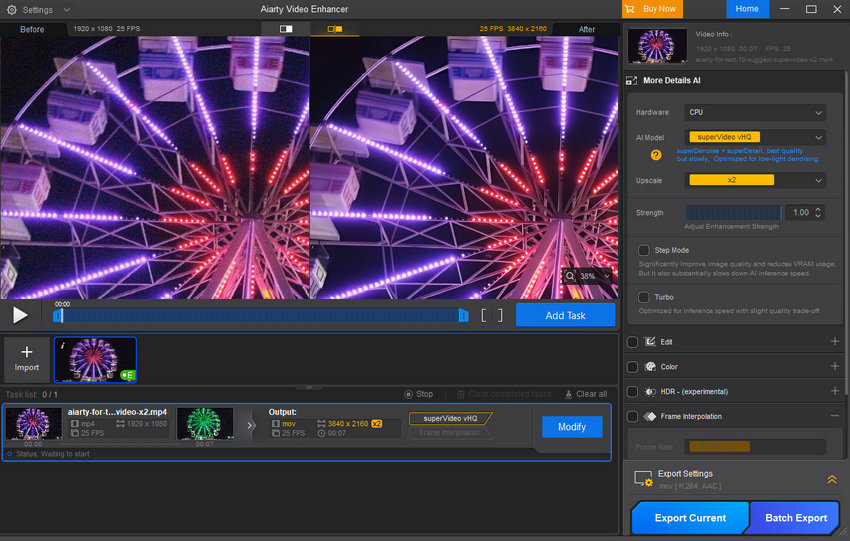
Another difference is the processing workflow. Aiarty runs video enhancement locally without requiring cloud uploads or AI credits, so you can work with your own footage without relying on cloud-based processing quotas. It also supports GPU acceleration, with utilization of up to 95% on supported hardware, and offers a Turbo mode to speed up processing.
Overall, Aiarty is worth considering if your priority is restoring and enhancing existing footage with a local workflow, particularly when batch processing, privacy, and predictable processing costs matter. HitPaw VikPea offers a broader combination of enhancement and AI generation tools, while Aiarty takes a more focused approach to video quality improvement.
2. Topaz Video
Topaz Video feels like the seasoned pro, packed with advanced algorithms for upscaling to 16K, noise reduction, and face recovery. It's a powerhouse for restoring degraded footage, like 1990s VHS tapes, where it preserved textures like grass with minimal artifacts.
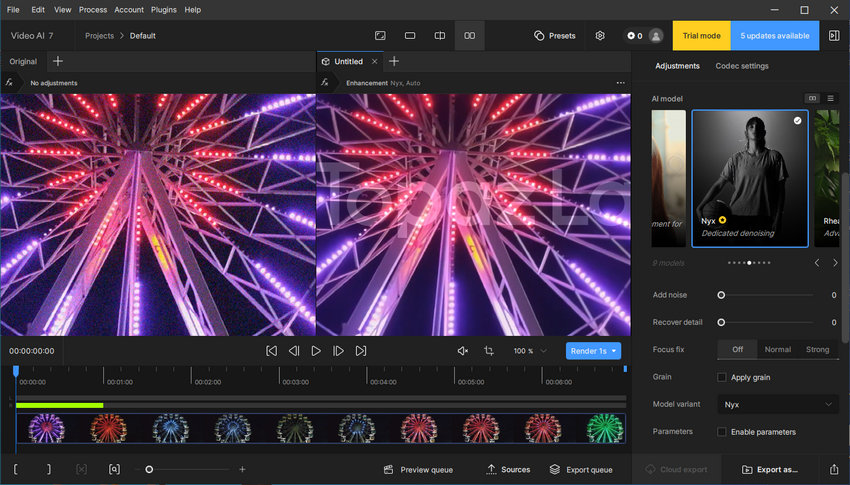
By contrast, VikPea is the approachable newcomer, offering 10 specialized AI models, such as General Denoise for cleaning noise, Face Model for sharpening portraits, and Animation Model for enhancing anime clips. When I upscaled a blurry 360p family video to 4K using VikPea's General Denoise Model, the results were sharp, though complex scenes showed slight artifacts.
VikPea's Animation Model was a standout for anime, keeping vibrant styles intact, but its SDR to HDR conversion sometimes oversaturated colors compared to Topaz's more natural output. On my GTX 1050 Ti, VikPea processed a 1080p clip to 4K in about one second per frame, slightly faster than Topaz, especially with VikPea's cloud acceleration (80% faster, per HitPaw). VikPea's drag-and-drop interface is a dream for beginners, while Topaz's complex menus suit tech-savvy users.
VikPea is ideal for casual users and anime fans; Topaz excels for pros tackling archival footage.
3. VideoProc Converter AI
VideoProc Converter AI is positioned as a multifunctional video processing suite that combines AI upscaling with comprehensive video editing, conversion, compression, and stabilization features. It supports a wide range of formats and offers GPU acceleration for efficient processing, making it suitable for hobbyists, vloggers, and professionals who want an all-in-one solution. While it includes AI-driven enhancement capabilities, it is less focused on specialized restoration tasks like video repair or colorization.

In contrast, HitPaw VikPea specializes in advanced video enhancement and restoration, offering multiple AI models tailored for tasks such as denoising, colorizing black-and-white footage, repairing corrupted videos, and upscaling up to 8K resolution. Its features like background and object removal, frame interpolation, and AI-assisted model selection make it a powerful tool for users focused on improving video clarity and detail, especially for archival or creative restoration projects.
Pros and Cons of HitPaw Video Enhancer
- Powerful AI Models: Offers 10 specialized AI models, like General Denoise for noise reduction, Face Model for sharper portraits, and Animation Model for vibrant anime clips. I turned a grainy 360p family video into a stunning 4K clip with impressive results.
- User-Friendly Interface: Drag-and-drop simplicity makes it a breeze for beginners and pros. No tech degree needed to get great results.
- Versatile Creative Tools: Includes AI Background Removal, Watermark Removal, and video repair for flickering or unplayable clips, adding flexibility to your projects.
- Regular Updates: Frequent software updates keep it fresh, with responsive customer support to back it up.
- Slow Processing Times: High-resolution videos (like 4K or 8K) can take a while. On my mid-range PC, upscaling a 1080p clip took about one second per frame, which adds up.
- Occasional Artifacts: Some models, like Low-light Enhancement, can introduce grain or overexposure. I noticed this in a dark vacation clip where colors popped but darker areas got noisy.
- HDR Limitations: SDR to HDR conversion is vibrant but doesn't fully match native HDR quality, which may disappoint cinematic purists.
Final Verdict
After testing HitPaw VikPea, I'm impressed by its ability to breathe new life into videos. Its 10 AI models—like General Denoise for cleaning grainy clips, Face Model for sharper portraits, and Animation Model for vibrant anime—deliver solid results. I turned a fuzzy 360p family video into a crisp 4K gem, and the drag-and-drop interface made it a breeze, even for beginners. Creative tools like AI Background Removal and video repair for fixing flickering clips add versatility. For casual users, content creators, or anyone restoring old footage, VikPea is a game-changer, especially with its free trial letting you test the waters.
That said, it's not flawless. Processing high-res videos (4K or 8K) can be slow—about one second per frame on my mid-range PC. Some models, like Low-light Enhancement, risk graininess, and the SDR to HDR conversion doesn't quite match native HDR quality. If you're a pro chasing cinematic perfection, these quirks might nudge you toward pricier tools like Aiarty Video Enhancer.
To get the most out of VikPea, match the AI model to your video type (e.g., Animation Model for anime, Face Model for portraits) and preview results before exporting. It's ideal for hobbyists, YouTubers, or anyone wanting quick, impressive enhancements without a steep learning curve. My advice? Download the free trial and see how it transforms your clips.
You May Also Like


This post was written by Brenda Peng who is a seasoned editor at Digiarty Software who loves turning ordinary photos into extraordinary works of art. With AI assistance for brainstorming and drafting, the post is reviewed for accuracy by our expert Abby Poole for her expertise in this field.
