What AI Can Recover - and What Still Belongs to the Photographer
John Vargas revisited portraits from his entry-level camera days, then compared them with the professional work he creates today - putting AI to the test across two very different stages of his photography.
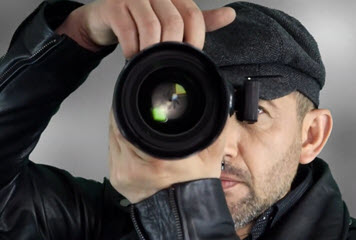


John Vargas is the photographer and educator behind FotógrafoPro, a Spanish-language photography channel covering photographic techniques, lighting, photographer biographies, and the craft behind better images. His work is centered not only on equipment, but on helping photographers develop their technique and visual judgment. Watch John's Original Video on YouTube.
About This Collaboration: Aiarty contacted John and invited him to put Aiarty Image Enhancer to the test. In his original Spanish-language video, John made it clear that he was free to test the software and share his honest opinion. He didn't make the test easy. He used his own work from different stages of his photography - from older portraits shot with entry-level gear to high-resolution commercial portraits. His original review and our follow-up were in Spanish; we've kept that original context while sharing his story here in English.
Going Back to Where He Started
For the first part of the experiment, John went back through old hard drives. He found portraits and fashion photographs from earlier in his career - real sessions shot with his older Sony A68 and Sony A6000 using their kit lenses.
He still loved the photographs for their posing and light. But viewed at 100%, the technical limitations were easier to see: less definition from the basic lenses, noise from the older sensors, and file compression.
"Estas imágenes me encantan por la pose y la luz, pero técnicamente tienen las limitaciones de la época."
"I love these images for the pose and the light, but technically they have the limitations of their time."
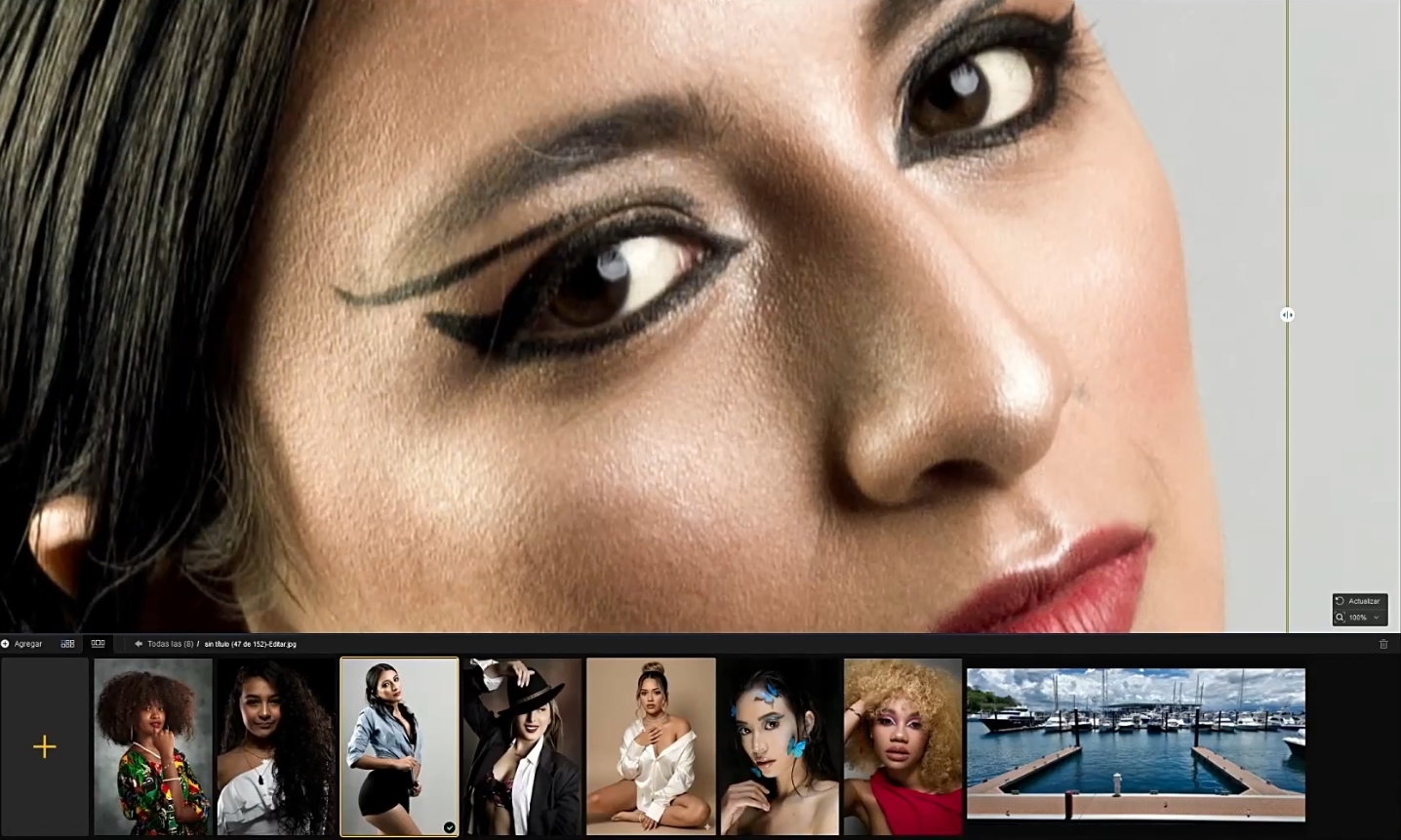
What Could AI Recover from an Older Portrait?
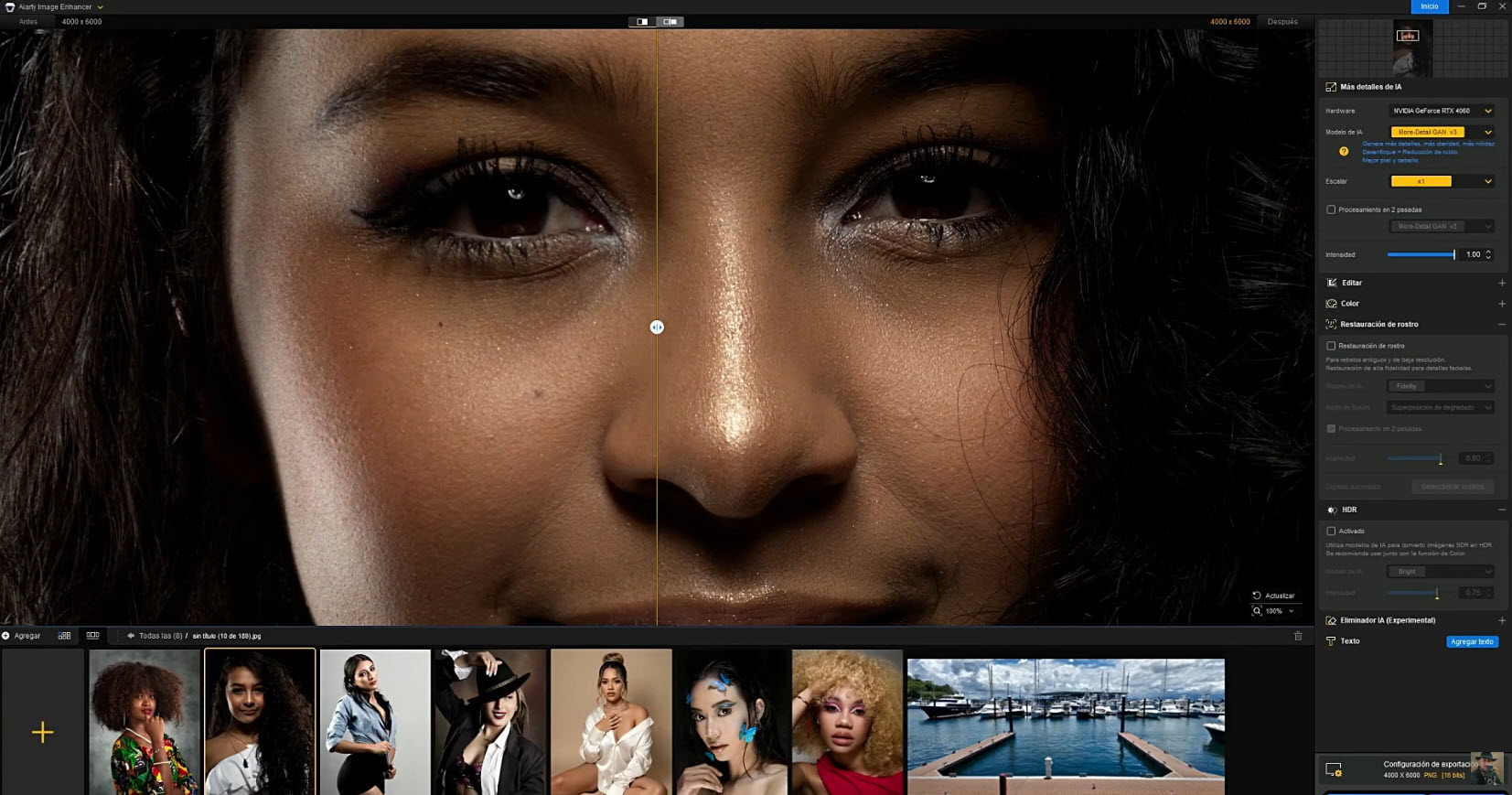
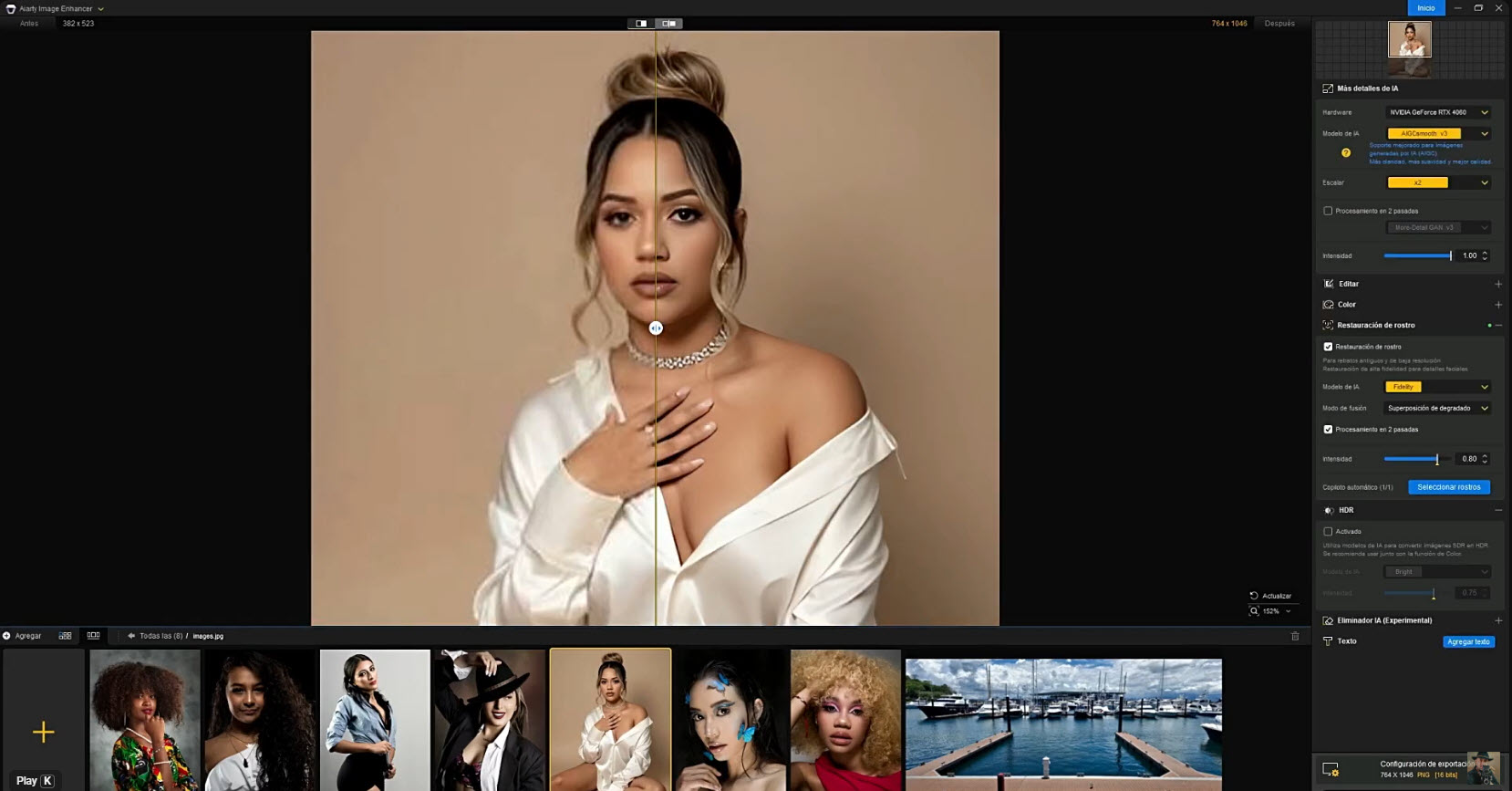
John applied the More-Detail model and doubled the image size. At 100%, he examined details such as fabric fibers, eyelashes, hair, and facial definition.
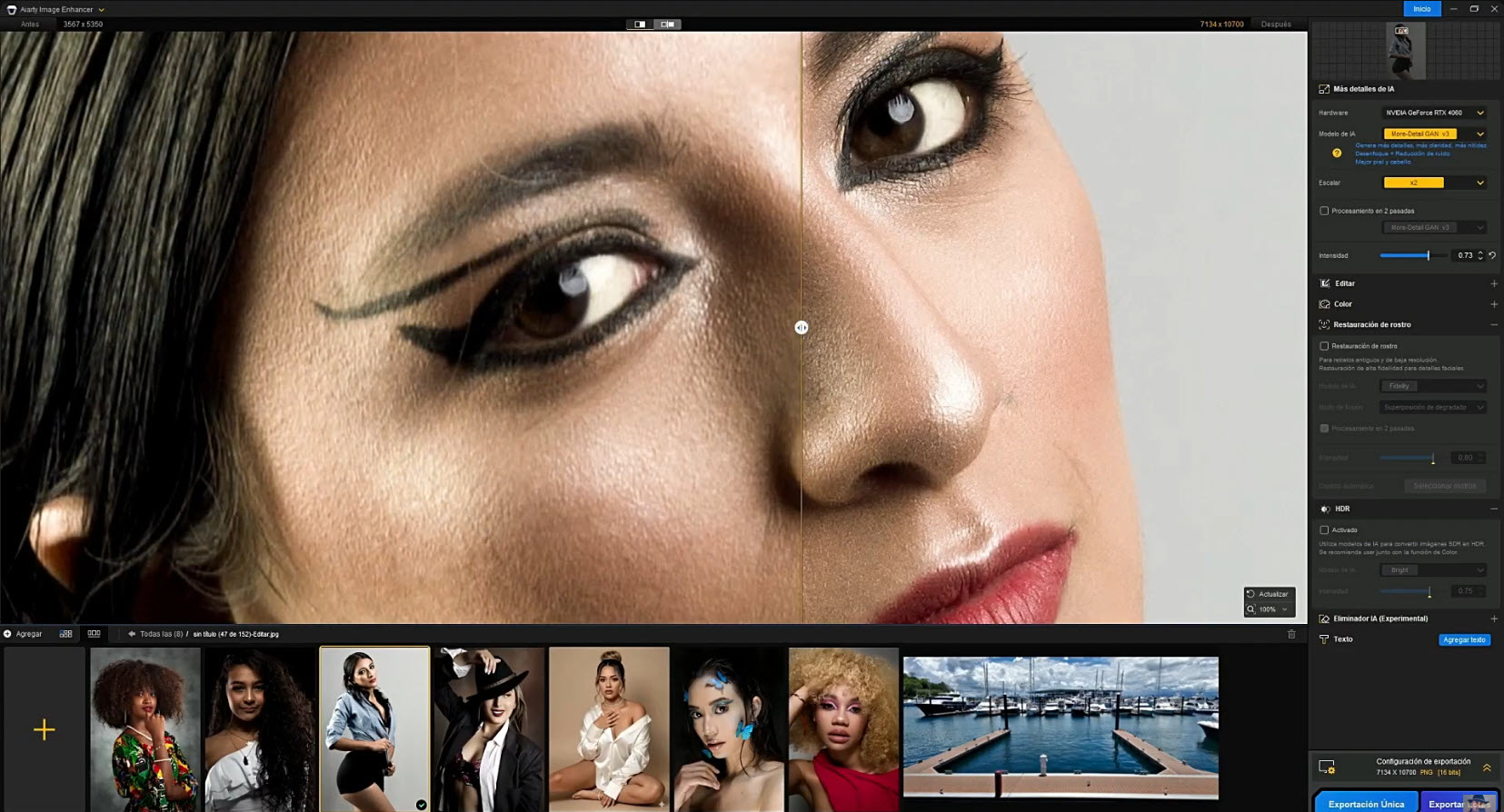
"Logró que un retrato antiguo tomado con una cámara de gama de entrada pareciera haber sido capturado hoy con un equipo de gama mucho más alto."
"It made an old portrait taken with an entry-level camera look as though it had been captured today with much higher-end equipment."
In another portrait, John examined the result at 100% to compare facial detail and texture.
But John Drew a Line
The result didn't change John's view of what software can and cannot rescue. A completely missed-focus portrait, severe motion blur, or information lost through poor lighting were examples of what he said AI could not recover.
"Seamos completamente realistas: esta herramienta no hace milagros."
"Let's be completely realistic: this tool doesn't perform miracles."
"La inteligencia artificial no puede inventar arte donde no hay nada."
"AI cannot invent art where there is nothing."
- Rescue - or a Shortcut?
- The result led John to a question beyond image quality: if software improves the sharpness of an old portrait shot with inexpensive equipment, does that diminish the photographer's original technique — or is it simply another step in the evolution of digital development?
A Different Kind of Low-Resolution Problem
John also tested a problem photographers sometimes encounter in client work: extremely small web images and logos, some only around 200 pixels wide. He enlarged them by 4× and 8× to examine geometric lines, compression noise, and design contours.
Then He Tested the Files That Didn't Need Rescuing
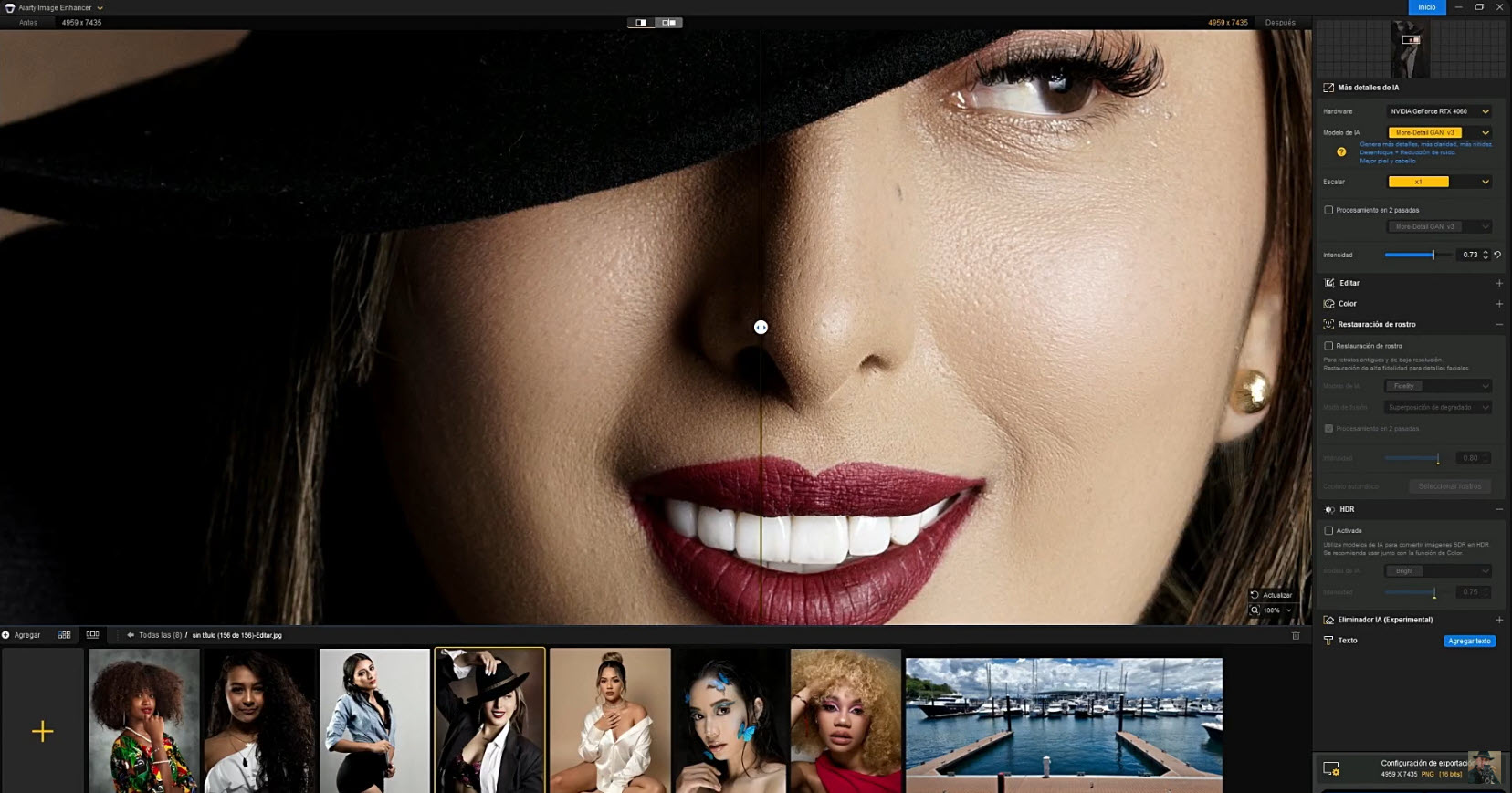
Next, John reversed the experiment. Instead of asking what AI could recover from an older file, he used high-resolution commercial portraits shot with his Sony A7R III and Sigma Art 50mm f/1.4 — a combination he described as already extraordinarily sharp on its own.
For a portrait photographer, this created a different test. The question was no longer how much detail AI could add, but how much of the original subject it could preserve.
For John, More Detail Wasn't Always Better
John's standard for a professional portrait wasn't simply maximum sharpness. After years of portrait work, he said the authenticity of the subject mattered more.
"Si un programa cambia la forma de un ojo o la caída natural de una pestaña para hacerla más perfecta, ha fracasado como herramienta profesional."
"If a program changes the shape of an eye or the natural fall of an eyelash to make it more perfect, it has failed as a professional tool."
John Took the Concern to Aiarty
John didn't leave the concern at the level of a YouTube observation. He contacted Aiarty directly and raised it with the team. In his video, he described the response as "very honest."
Our conversation with John continued in Spanish. We agreed that his concern was valid: when an original already contains fine, authentic optical detail, AI enhancement should be careful not to replace that information with reconstructed detail. For us, the principle is simple: "Our goal is always to enhance, not redraw."
— From Aiarty's Spanish-language follow-up with John.
What Aiarty Took from the Conversation
AI enhancement is most useful when it has something meaningful to recover: noise to reduce, lost-looking texture to reconstruct, or resolution that limits how an image can be used.
But a high-quality professional file presents a different responsibility. When the camera and lens have already captured fine, authentic detail, preserving that information can matter more than generating more of it. John's test reinforced an area we're continuing to improve: keeping enhancement useful without unnecessarily rewriting what the camera captured.
The Bigger Question: Can AI Replace Better Gear?
John's experiment started with a provocative question: can AI help close the technical gap between entry-level equipment and more expensive cameras and lenses?
His conclusion was more nuanced than a simple yes or no. Technology could help overcome some camera limitations, reduce noise, recover textures, and rescue files that might otherwise be difficult to use or print. But there was a boundary it couldn't cross.
What Still Belongs to the Photographer?
For John, a good photograph was never just a mathematically sharp file or a larger number of pixels. It began much earlier — with the light, the moment of focus, the perspective, and the decisions made behind the viewfinder.
"La inteligencia artificial puede trabajar sobre el pasado, pero no puede sustituir tu sensibilidad al presionar el disparador."
"AI can work on the past, but it cannot replace your sensitivity when you press the shutter."
John ended the test by inviting photographers to try the tool on their own images and draw their own conclusions.
About This Story
This story is based on John Vargas's original Spanish-language FotógrafoPro video and our subsequent Spanish-language conversation with him. It condenses his tests, observations, and conclusions for readability while preserving the context of the original review.
Aiarty contacted John and invited him to test Aiarty Image Enhancer. In his video, John said he was given complete freedom to test the software and share his honest opinion. The portrait photographs featured in the core tests came from John's own photography, while the separate low-resolution web and logo test used downloaded assets, as he explained in the video. John's quotations are presented in the original Spanish with English translations for accessibility. Aiarty's comments are identified separately so that John's observations and our own responses remain distinct.