


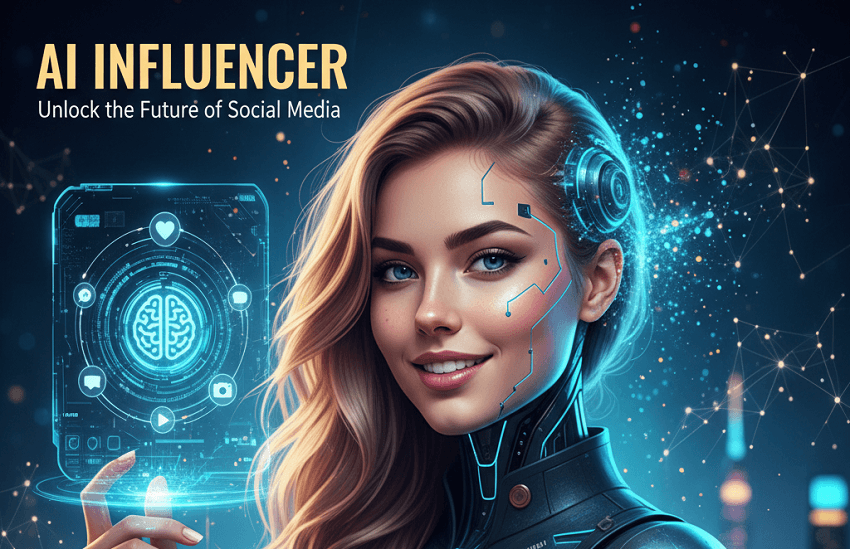
If you spend any time scrolling through Instagram or TikTok, you've seen the glossy, often perfectly unrealistic world of social media stardom. But what happens when that star isn't human? That's the fascinating core of our topic: the AI influencer.
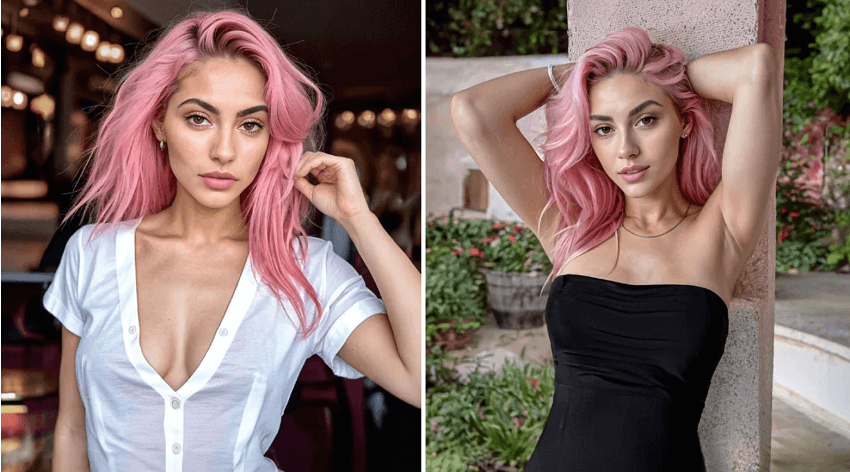
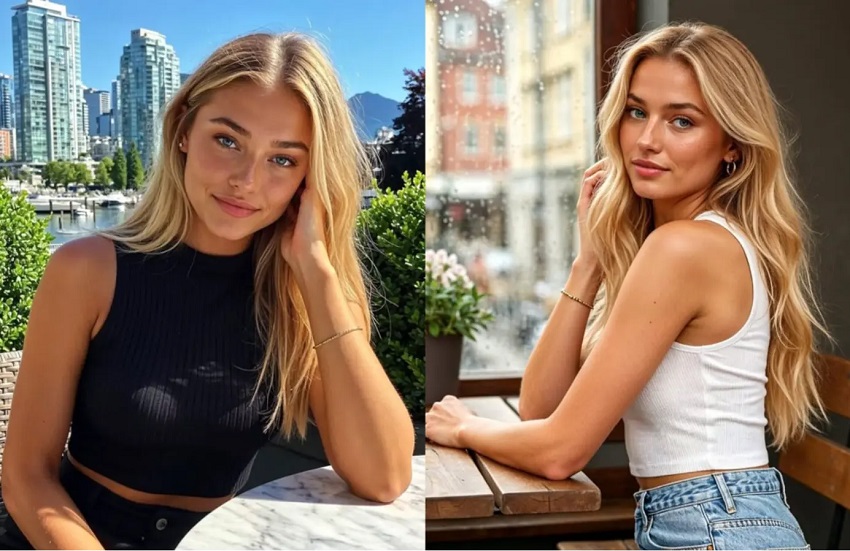
Put simply, an AI influencer is a fully digital persona, a sophisticated character entirely generated and managed by artificial intelligence tools. They are designed from the ground up to interact with an audience on social media platforms, building a following, a brand, and, yes, a hefty paycheck.
What makes these virtual stars such a game-changer? Their key differentiators aren't just technical novelties; they're genuine competitive advantages:
- Zero Physical Limitations: Forget scheduling conflicts, travel headaches, or last-minute cancellations. They have no physical limitations and can appear on a moon base or a 1920s jazz club in the span of a single afternoon.
- Total Control and Consistency: As a seasoned editor, I love control—and this is the ultimate form. You have complete control over appearance and narrative consistency. Every hair strand, every emotion, and every brand message is perfectly managed.
We're not talking about niche experiments here, either. Virtual figures have already broken through to the mainstream. Think of Lil Miquela, who has millions of followers and high-profile brand partnerships, or the beautiful virtual model Imma from Japan. These are successful, virtual figures proving the model works.
Why Jump into the AI Influencer Game?
So, why are brands, creators, and entrepreneurs rushing to invest time and resources into virtual personalities right now? It boils down to a powerful mix of technology, economics, and sheer creative freedom.
First, there's the irresistible Novelty Factor. In an increasingly crowded digital landscape, brands are constantly looking for unique, future-forward ways to engage audiences. An AI influencer isn't just a spokesperson; it's a conversation piece.
Next, let's talk business: Cost and Efficiency. While the initial creation requires skill (which we'll cover in detail), the operational costs eventually lead to a reduced overhead compared to managing a human celebrity. No elaborate travel, no huge entourage, and no massive talent fees every month. It's an efficient operation run on code and creativity.
Finally, and this is where the editing enthusiast in me gets excited, you gain Creative Control. You have total freedom to place the influencer in any scenario, anywhere in the world, with perfect fidelity. If your niche is futuristic fashion, you can launch a collection on Mars. If it's vintage travel, your influencer can pose in flawless 1950s Paris. This unparalleled creative freedom is the engine that drives unique content, which, as every content creator knows, is king.
Hot search: Best free stock footage websites to start your vlogs >>
Phase 1: Conceptualizing Your AI Influencer (The Blueprint)
Before you fire up Midjourney or Stable Diffusion, you need to do the hard work of creative development. Skipping this step is the fastest way to create a forgettable, generic digital face that blends into the feed. Think of this phase as creating the character sheet for your virtual protagonist.
If the goal is to drive engagement and eventually, monetization, your virtual star needs more than just good looks; they need substance. They need a why.
1. Niche and Platform Strategy: The Two P's
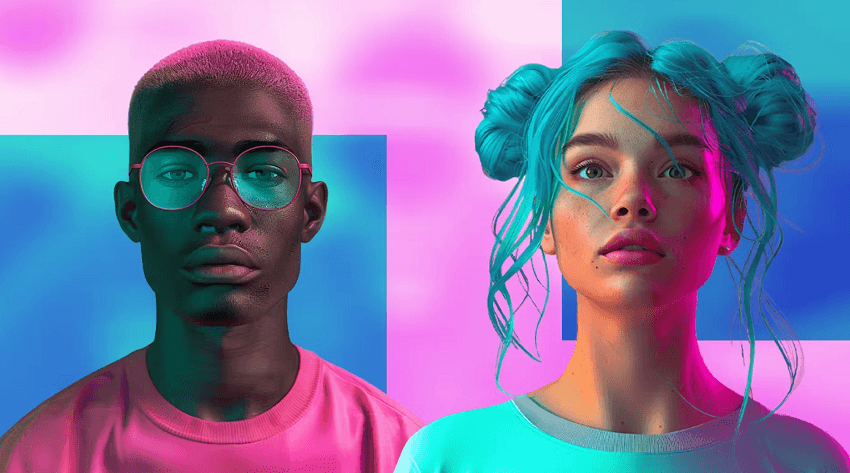
The first decision is arguably the most crucial: Niche Selection. As data suggests, success in the crowded influencer space comes from a specific focus. You need to narrow your niche to distinguish your digital persona in a saturated market.
Think small to grow big: Instead of "Fashion," go for futuristic fashion (like high-tech wearable art). Instead of "Gaming," try retro gaming history commentary. Maybe your character is a virtual expert in sustainable travel with a clear commitment to eco-friendly practices. This laser focus attracts a dedicated, passionate audience who are deeply interested in that single subject.
Pick the right stage: The niche dictates the platform.
- Instagram is still king for visuals and curated aesthetics (perfect for fashion or art niches).
- TikTok excels at short, creative, fast-paced personality and engaging videos (ideal for comedy or quick tech reviews).
- X (formerly Twitter) is best for commentary and thought leadership (great for a sarcastic, knowledgeable persona).
2. Personality and Narrative Backstory
Remember: a virtual influencer is just colorful pixels without a compelling story to give it life. The narrative is what creates that all-important parasocial bond with the audience.
- Define Core Traits: Is your influencer sarcastic and knowledgeable (the expert critic), or gentle and aspirational (the wellness guru)? The tone must be consistent and resonate authentically with your chosen target audience.
- Establish a Believable Backstory: Where do they "live?" What is their "job?" Giving them human-like context makes them more relatable. For instance, Liv, a successful virtual influencer, started her storyline by accidentally falling into a portal to the year 3000. It's an imaginative narrative that gives her content purpose and direction. You don't need a time machine, but you do need a foundational narrative—something about their origins or passions that informs their existence.
3. Establishing Visual Aesthetics: The Brand ID
As someone who spends hours editing, I can tell you that visual consistency is non-negotiable. High-quality, visually appealing content amplifies the user's flow experience and boosts engagement.
Your goal here is to establish a digital footprint that is instantly recognizable:
- The Vibe Board: Develop a consistent mood board covering style, lighting, and color palette. This is your visual guide for every piece of content. Are they always in cinematic, high-contrast black-and-white, or always using soft, warm, diffused light? Stick to it!
- The Identifiable Feature: Give your AI persona a permanent visual signature. This could be a unique hair color (Lil Miquela's dark bangs), a specific pair of statement jewelry, or an artistic filter that subtly changes the tone of every image. This visual anchor ensures that even if they change outfits or locations, they are unmistakably your AI influencer.
Defining these core elements is the groundwork. Once this blueprint is set, you can move on to the fun (and complicated) technical phase: the actual digital creation.
For a deeper dive into how to build a virtual personality from the ground up, check out this video:
Phase 2: Creation — Bringing the Virtual AI Influencer to Life (The Visual Workflow)
Once you have your AI influencer's backstory and aesthetic mapped out—the core identity from Phase 1—it's time to transform that detailed vision into photorealistic assets. This phase is less about art and more about engineering consistency.
1. Technical Creation: Generating the Base Assets
The biggest challenge in AI image generation isn't making one great picture; it's making 100 pictures of the same character that look consistent. You need a reliable tool and an even more reliable prompting strategy.
Choosing the Right AI Generation Tool
You have two main paths to choose from, and your choice depends on your expertise and desire for control:
- Midjourney/DALL-E 3 (or ChatGPT): These are fantastic for photographic realism and complex scenes. They require a simpler setup and are excellent for beginners. If you need a virtual star in a highly stylized, cinematic setting fast, these are your go-to. They are less forgiving, however, when it comes to maintaining ultra-precise facial consistency across hundreds of images.
- Stable Diffusion (Local/Cloud): If you want the ultimate granular control, Stable Diffusion, often run locally or via cloud services, is the power user's choice. While the learning curve is steeper, it offers the ability to fine-tune and use LoRAs (Low-Rank Adaptation models). This is crucial for consistency, as you can train the model specifically on your AI influencer's face, ensuring it stays perfect.
The Prompt Engineering Secret to Consistency
The secret sauce to a believable AI influencer isn't just the AI model—it's the prompt that governs it. Your prompt needs to be less of a request and more of a technical specification document for every image you create.
- The Golden Rule: Use "Seed" Values. The Seed is a hidden number that determines the initial noise pattern from which the image is generated. If you generate a face you love, find its seed value and reuse it religiously. This ensures the foundational structure of the image, especially the facial geometry, remains identical across all images.
- Character Description Tags: Always include a detailed block describing your character's look: "{female, age 25, high cheekbones, green eyes, unique blue streak hair, slight smile}". Keep this block the same in every prompt.
- Establishing the Camera Style: To make your content feel professional and cinematic, lock down your desired camera parameters: `(shot on Canon R5, 85mm lens, f/1.8 aperture, cinematic depth of field, natural lighting, high-quality DSLR)`.
- The Negative Prompt Guardrail: Don't forget the negative prompts! These tell the AI what not to generate. Incorporate them religiously to avoid the tell-tale AI glitches: `(deformed fingers, ugly hands, too many fingers, distorted limbs, watermarks, duplicate person, bad anatomy)`.
2. Post-Generation Enhancement: The Editor's Touch (Brenda's Expertise)
As an editor, I know the raw AI output is just the raw camera file. It's never the finished product. To achieve the truly convincing realism needed for a major social presence, you must apply the editor's touch.
Fixing Imperfections and Enhancing Realism
Even the best AI models struggle with specific body parts. If you are aiming for true realism, you will absolutely need to use editing software like Adobe Photoshop or Affinity Photo.
The most crucial step? The hands and the eyes. These features often break realism because they are geometrically complex and highly scrutinized by the human brain. You must manually correct warping, blend artifacts, and fix inconsistent light sources that the AI missed. If you want to build trust, every detail has to be flawless.
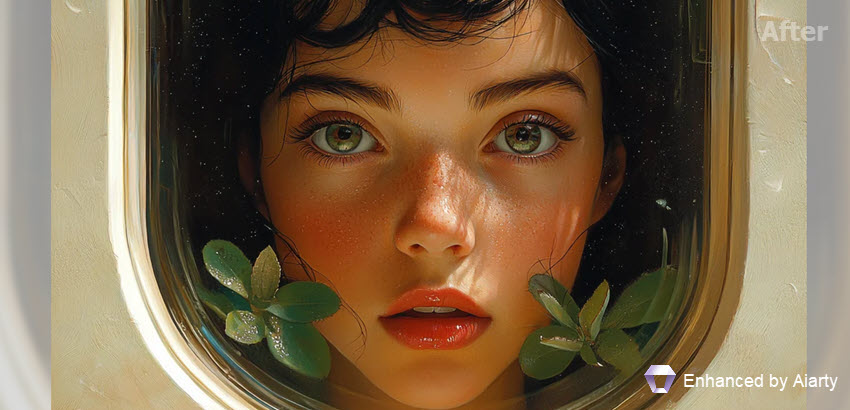
Besides, Generative AI models, while excellent at concepts, often deliver images that are "soft," lacking the microscopic detail required for large-scale, professional social media output. It is a mandatory step to run the raw output through dedicated AI enhancement software, for example, Aiarty Image Enhancer.
This tool is crucial because it moves beyond simple bilinear scaling; it uses advanced deep learning models to reconstruct detail at a much higher resolution.
- Intelligent Upscaling and Detailing: The primary function is to increase image resolution (typically 4x or 8x) by intelligently synthesizing high-frequency details. This is vital for rendering hyper-realistic textures in hair, skin pores, and fine fabric weaves, which transforms an AI-generated image from looking synthetic to photorealistic.
- Noise and Artifact Elimination: The tool effectively eliminates the subtle "digital grime," compression artifacts, and color banding often left behind by generative models, pushing the final image closer to true photographic realism, suitable for high-density displays.

Adding Realistic Grounding Elements
A perfect face placed on a flat, unrealistic background is a giveaway. To ground your virtual influencer convincingly into the real world, focus on two key areas:
- Lighting Overlays: Add realistic ambient lighting overlays and adjust the depth of field. A high-quality photo has subtle lens blur; yours should too.
- Shadows and Reflections (Tutorial): This is the ultimate realism trick. Manually draw or overlay subtle shadows under the influencer's feet, objects, and chin. Check the background—if there's a shiny floor, does the influencer have a corresponding reflection? Color grade the shadow to match the background environment perfectly, moving beyond the "raw" AI output's flat contrast.
3. Voice, Video, and Interactivity
In today's short-form video economy, images aren't enough. Your AI star needs to speak and move.
Platforms like ElevenLabs are invaluable here for AI voice generation. Use them to generate a consistent, distinct, and branded voice for all video content and audio clips. Never let your influencer use a generic, robotic voice; personality is built on sound.
For dynamic content like Instagram Stories or TikTok Reels, tools like RunwayML or Synthesia can turn a static image into a short, lifelike video clip, complete with lip-syncing. This ensures your virtual star can participate in the high-frequency video formats audiences crave, maintaining that essential 24/7 consistency.
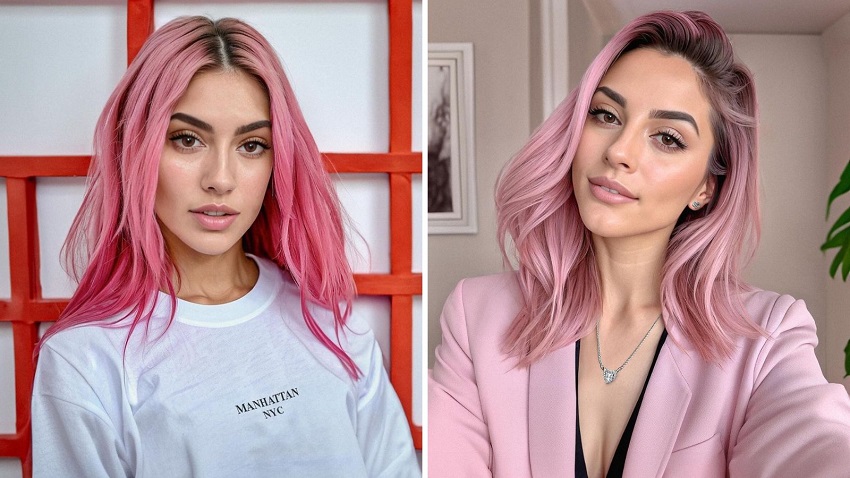
Phase 3: Content Strategy and Management
Phase 3 is where the digital magic truly becomes a sustainable business. You've created the perfect virtual avatar, but now you need to treat them like a successful media property. This is the operational core of running an AI influencer: ensuring content is not only consistent and strategic but also interactive, allowing you to scale your output while fiercely maintaining the authentic narrative you established in Phase 1.
1. Crafting a Story-Driven Content Calendar
The shift from a creative project to a successful media brand hinges entirely on the consistency and quality of your content calendar. Every post, story, and reel should serve a dual purpose: reinforcing the core narrative of your influencer while driving engagement. A meticulous calendar is your defense against burnout and inconsistent messaging, especially when managing a digital persona that theoretically never sleeps.
Balancing Image Types for Authenticity
To build a credible and relatable feed, you must strategically avoid the pitfall of posting only perfect, high-production studio shots. Your content mix needs to mimic the organic, sometimes chaotic, variety a human creator would produce.
- Lifestyle Shots: These are your aspirational anchors. They showcase your influencer engaging with their niche in high-quality, fully-rendered scenes. Use these to reinforce the influencer's brand, like posing in a hyper-realistic futuristic cafe, on a synthetic high-fashion runway, or exploring a digitally rendered ancient city. These posts establish the standard of your creative ability.
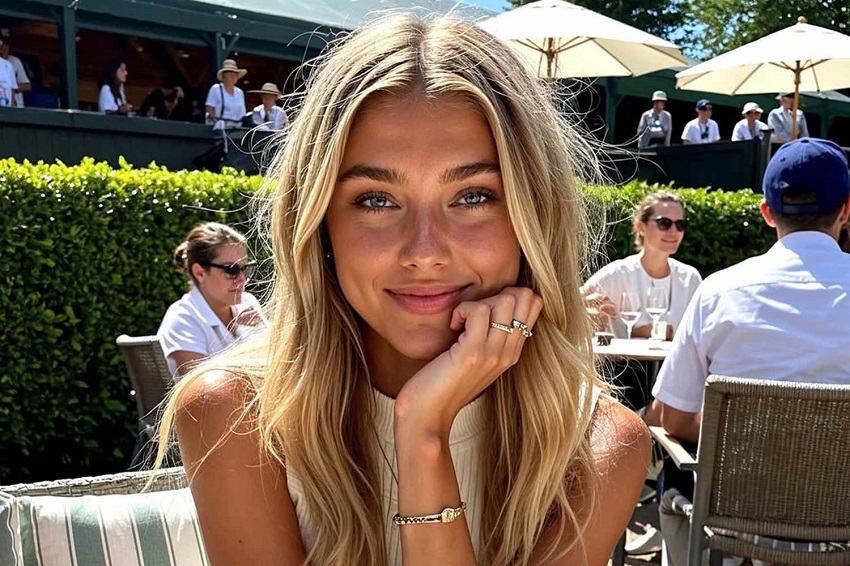
- "In-the-Moment" Content: This is critical for humanization. Mix in simulated selfies, slightly blurred or casual shots, and content tagged with fictional friends or synthetic locations. This gives the audience a sense of intimacy and unscripted daily life, making the character feel less like a model and more like a friend.
- Product Endorsements: The key here is seamless integration. Instead of a blatant ad, the sponsored product or service must be organically incorporated into one of the lifestyle or in-the-moment shots, making it feel like a genuine part of the influencer's world and taste, rather than a forced commercial break.
Developing Recurring Themes
Create segments that your audience can look forward to. This predictability builds familiarity and attachment, positioning your influencer as a regular, comforting presence in their feeds. Examples include: #CyberMondayStyle (a weekly futuristic fashion review), #TuesdaysWith[InfluencerName\] (a personal fictional anecdote or thought for the day), or #DigitalDestinations (a post from a synthetic but beautifully rendered location).
Scripting Relatability
Remember, your ultimate goal is to generate human connection. The narrative must include fictional challenges, growth moments, and emotions to foster empathy. Use the persona's predefined traits (from Phase 1) to generate dialogue and captions that feel real. For example, a "sarcastic and knowledgeable" influencer might post about "struggling" with a coding challenge, while a "gentle and aspirational" one might express "excitement" about a new virtual collaboration. Relatability is ultimately about sharing human experiences, even if the character itself is digital.
2. Automation and Interaction (The 24/7 Engine)
The core competitive advantage of a virtual influencer is the ability to manage a massive community around the clock without fatigue. AI is the engine handling the continuous content and engagement, but—and this is vital—human oversight remains mandatory to ensure quality, prevent ethical errors, and maintain creative direction. This hybrid approach is what allows for true, sustainable scale.
Scheduling Content for 24/7 Presence
Utilize robust third-party schedulers (like Buffer, Hootsuite, or Predis.ai) to automate the entire posting process across every platform. This ensures seamless, round-the-clock activity across multiple global time zones, maintaining the illusion of a constant, energetic presence without requiring a human to be awake at 3 AM to post.
AI-Powered Community Management
This is where you bring the persona to life in real-time, handling the massive volume of user interactions that lead to high engagement.
- Deploying a Customized LLM: Use a large language model (LLM), such as a fine-tuned version of Gemini or GPT, specifically to draft replies to direct messages (DMs) and comments. This allows you to interact with thousands of fans simultaneously.
- Tone Matching: The LLM must be trained on a detailed data set of the influencer's specific tone, slang, and vocabulary (e.g., witty and sarcastic, or gentle and aspirational). A generic, sterile AI response will instantly break the illusion and erode the audience's trust in the persona.
- Guardrails and Oversight: Implement strict guardrails to ensure the AI chat responses stay perfectly "in character," never revealing or discussing its own AI nature unless that is an explicit part of the established script. Crucially, a human community manager must be the final authority, reviewing and handling sensitive or complex user interactions (like a crisis, controversy, or a deeply personal question) that an AI might fail to handle authentically or sensitively. This hybrid model ensures maximum efficiency without sacrificing audience trust.
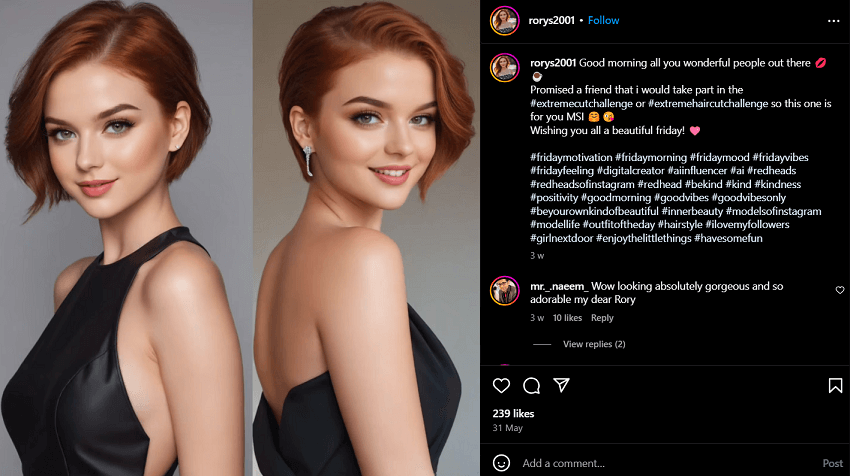
Phase 4: Growth, Monetization, and Legal Considerations
This final phase focuses on the ultimate objective: turning your creative project into a profitable, legally sound venture. It addresses how to scale your audience rapidly, the diverse ways AI influencers generate revenue, and the critical legal and ethical hurdles you must clear to maintain long-term viability.
1. Building an Audience and Scaling Engagement
Scaling an AI influencer relies on leveraging their innate digital advantages over human competitors.
Virtual influencers consistently yield up to three times higher engagement rates than their human counterparts. This is primarily due to their novelty and the consistency afforded by the 24/7 interaction engine you established in Phase 3. The key here is to leverage this edge by focusing intensely on personalized responses and real-time community interaction.
AI eliminates physical and geographical barriers. Your influencer can appear simultaneously across multiple time zones and platforms without scheduling conflicts. Utilize robust audience analytics to rapidly adapt the content style, language, and posting times to maximize reach and conversion in niche, global markets. For instance, if data shows high engagement from Japan at 8 PM JST, your AI can automatically post tailored content at that exact moment.
To maximize reach, every piece of content should be repurposed for optimal performance on different platforms. A single high-resolution image generated in Phase 2 can become a long-form story narrative on Instagram, a short, looping vertical video on TikTok, and a philosophical comment on X, ensuring maximum saturation from minimal core effort.
2. Monetization Pathways
The revenue streams for virtual influencers are diverse and often more scalable than those for human creators.
Brand Collaborations and Sponsored Content
This is the primary revenue driver. High-profile virtual influencers consistently secure deals with major luxury brands (like Dior, Balenciaga, or Prada). Focus initially on digital or intangible product promotion (software, games, digital fashion, experiences) to align with the influencer's nature. More ambitiously, explore the B2B Opportunity: position your AI influencer as a niche technical expert or thought leader to secure higher-value, enterprise-level partnerships (e.g., demonstrating software, explaining complex industry solutions).
Direct Audience Revenue (Subscriptions & Tips)
Developing stable, recurring income is crucial for longevity.
You can go for fan subscriptions,by offerring exclusive, behind-the-scenes content (e.g., mock 'failed' renders, early access to new outfits, fictional anecdotes) through tiered platforms like Patreon or native platform subscriptions. This provides reliable monthly revenue.
Or you can utilize platforms that support real-time interaction (e.g., Twitch, TikTok Live) where fans can send virtual gifts or one-time tips to get tipping. This offers a highly engaging revenue channel that capitalizes on the novelty of interacting with an AI persona in real-time.
Affiliate Marketing and Digital Assets
Integrate product recommendations directly into the narrative and captions using unique links and codes. This strategy scales efficiently due to the ability to create targeted, personalized content quickly for niche audiences (e.g., integrating Amazon Associates or specialized platform links).
Creating and selling unique NFTs of artwork, "outfits," or collectible moments. You can also sell digital merchandise such as customized filters, presets, tutorials, or automated masterclasses related to the influencer's niche, capitalizing on their digital expertise.
3. Addressing Copyright, Ethics, and Disclosure
Neglecting the legal and ethical landscape can lead to catastrophic brand failure and costly legal disputes.
The Authorship Dilemma (US Copyright Law)
Under current US Copyright Office guidance, copyright protection for AI-generated works is only granted where a human author has determined sufficient expressive elements. The mere provision of text prompts is generally not considered sufficient creative control to grant authorship. You must be prepared to demonstrate significant human editing, arrangement, or modification of the AI output (Phase 2's focus) to claim full ownership and legally protect your content against infringement.
Mandatory Transparency and Public Trust
- Mandatory Disclosure: This is non-negotiable for both legal and ethical reasons. Always disclose clearly and prominently that the entity is AI-generated or Virtual (e.g., in the bio, using official platform labels).
- Avoiding the "Uncanny Valley": Be aware that a significant portion of consumers may distrust or feel uneasy about a brand using AI-generated likenesses. Transparency and focusing on relatable human narratives (Phase 3) is the key strategy for overcoming this discomfort and building trust.
- Ethical Responsibility: Maintain strict internal guidelines to avoid the creation of misleading, hyper-sexualized, or exploitative content, particularly anything that resembles or exploits real human likenesses.
Conclusion: What's Next for the AI Creator Economy?
The journey to launching a successful AI influencer is not merely a technical exercise; it's a strategic fusion of creative vision, brand operations, and advanced technology. The future of the creator economy isn't about replacing human influencers entirely, but about expanding the possibility space of digital narrative and scalable engagement. An AI influencer, built correctly, is a resilient, 24/7 media brand capable of capturing global niches.

This post was written by Brenda Peng who is a seasoned editor at Digiarty Software who loves turning ordinary photos into extraordinary works of art. With AI assistance for brainstorming and drafting, the post is reviewed for accuracy by our expert Abby Poole for her expertise in this field.
