


An AI laptop in 2026 can mean very different things. A thin Copilot+ PC may be excellent at live captions, background effects, search, and other low-power on-device AI tasks, while a laptop with a powerful GPU and more memory can be far better for local LLMs, Stable Diffusion, AI video enhancement, machine learning, or generative creative work.
That is why choosing the best AI laptop should start with the workload you actually plan to run. For everyday AI features, the NPU matters. For image generation, video enhancement, 3D, and many machine-learning workloads, the GPU and VRAM often matter more. For local language models, available memory can become the deciding factor.
This guide compares seven strong AI laptops available in 2026 based on their CPU, GPU, NPU or AI engine, memory architecture, software compatibility, portability, and suitability for real AI workloads. We also explain how much RAM and VRAM you need, when an NPU matters, and when a GPU is the more important upgrade.
Quick answer: If you want one machine for a wide range of AI and creator workloads, the ASUS ROG Zephyrus G16 (2026) is the most versatile pick because it combines a modern Intel NPU with up to an NVIDIA RTX 50-series laptop GPU. If local LLMs and very large memory pools matter more, look at the HP ZBook Ultra G1a or ROG Flow Z13. For efficient Copilot+ features and battery life, the ASUS Zenbook A16 is the better fit.
Best AI Laptops in 2026: Quick Picks
There is no single laptop that wins every AI workload. The picks below are grouped by use case so you can choose around the hardware that matters most for your work.
1. ASUS ROG Zephyrus G16 (2026)
Best AI Laptop Overall
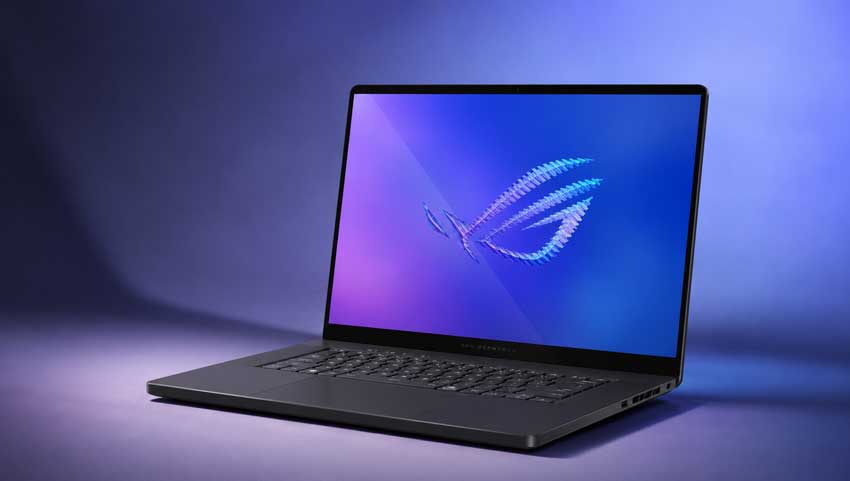
The 2026 ROG Zephyrus G16 is the strongest all-round choice in this guide because it covers both sides of modern AI computing: efficient on-device AI through its NPU and heavy GPU-accelerated work through NVIDIA RTX graphics.
ASUS offers the G16 with an Intel Core Ultra 9 386H and an Intel NPU rated at up to 50 TOPS. GPU options scale from the RTX 5060 to the RTX 5090 Laptop GPU. The RTX 5080 configuration includes 16GB GDDR7 VRAM, while the RTX 5090 Laptop GPU reaches 24GB GDDR7. That makes the machine far better suited to CUDA-heavy AI applications, generative imaging, AI video processing, 3D work, and GPU inference than a typical NPU-first thin-and-light laptop.
Its 16-inch 2.5K 240Hz OLED panel also makes sense for creators who need a single system for AI tools, editing, color-sensitive work, and everyday productivity. The tradeoff is obvious: this is a premium performance laptop, so it is heavier, more expensive, and less battery-focused than a Snapdragon Copilot+ PC.
Specs:
Pros:
- Dedicated RTX graphics provide much more headroom for GPU-heavy AI than most Copilot+ laptops.
- Up to 24GB VRAM on the RTX 5090 configuration.
- 50 TOPS NPU handles low-power on-device AI alongside the GPU.
- High-quality OLED display suits creative workflows.
Cons:
- High-end configurations are expensive.
- Less battery-efficient than NPU-first ultraportables.
- Performance and VRAM vary significantly by GPU configuration.
Current pricing: Check the latest configuration and regional price on the ASUS ROG official site.
2. HP ZBook Ultra G1a
Best AI Laptop for Local AI & LLMs
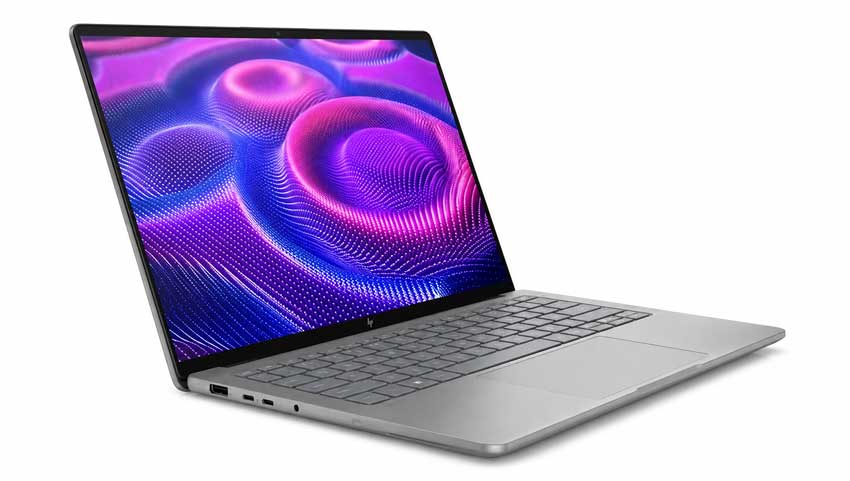
For local AI, memory capacity can matter more than a headline NPU number. The HP ZBook Ultra G1a is unusual because its Ryzen AI Max PRO platform combines CPU, graphics, NPU, and a very large unified-memory pool in a mobile workstation.
HP offers configurations with the AMD Ryzen AI Max+ PRO 395, Radeon 8060S integrated graphics, up to 128GB unified memory, and an NPU rated at up to 50 TOPS. HP states that up to 96GB of that unified memory can be assigned to graphics workloads. That is a major advantage for local LLMs, vision models, and other workloads that can exceed the fixed VRAM available on many laptop GPUs.
The ZBook is also positioned as a professional workstation, with ISV certification and up to 4TB of NVMe storage. It makes the most sense for developers, researchers, engineers, and creators who value local model capacity and professional workflows more than gaming performance.
Specs:
Pros:
- Up to 128GB unified memory gives local models much more memory headroom.
- Up to 96GB can be assigned to graphics workloads.
- Professional workstation positioning and ISV certification.
- Strong fit for local and offline AI workflows.
Cons:
- Premium workstation pricing.
- Software built specifically around CUDA or TensorRT may still favor NVIDIA RTX laptops.
Current pricing: Check current configurations on the HP ZBook Ultra official page.
3. ASUS ROG Flow Z13 (2025)
Best Compact AI Laptop for Large Local Models
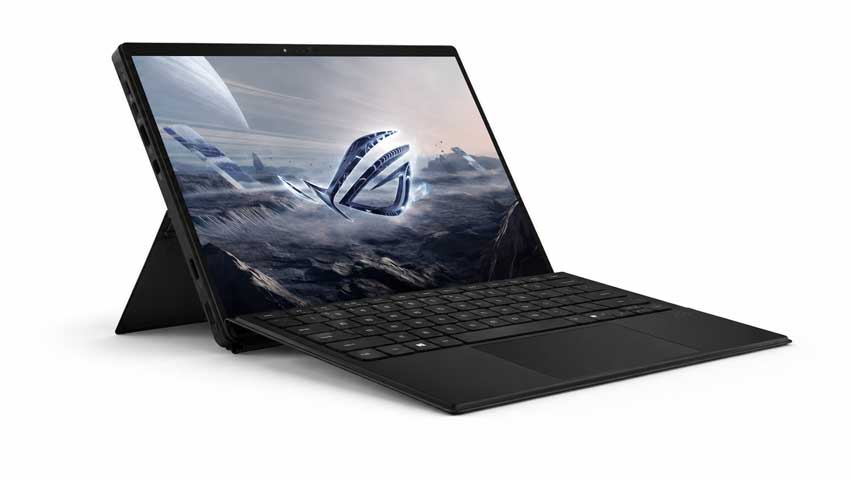
The ROG Flow Z13 is technically a 2025 model, but it remains highly relevant in 2026 because very few compact laptops combine this much shared memory with this level of integrated graphics performance.
Its AMD Ryzen AI Max+ 395 combines a 16-core Zen 5 CPU, Radeon 8060S graphics with 40 compute units, and an XDNA NPU rated at up to 50 TOPS. Selected configurations scale to 128GB LPDDR5X shared memory, which the CPU and GPU can access through a unified architecture.
That gives the 13.4-inch Flow Z13 an unusual niche: it can be a compact workstation for local AI users who need more model memory than a conventional 8GB or 16GB laptop GPU can provide. It is especially compelling for experimentation with quantized LLMs and memory-heavy local inference where CUDA is not a hard requirement.
Specs:
Pros:
- Rare combination of compact size and up to 128GB shared memory.
- Strong integrated Radeon graphics.
- 50 TOPS NPU for efficient on-device AI tasks.
Cons:
- Not the best fit for CUDA-only software.
- Compact form factor is less comfortable for users who want a traditional 15- or 16-inch workstation.
Current pricing: Check available configurations on the ASUS ROG official page.
4. Dell XPS 16 (2026)
Best Premium Windows AI Laptop
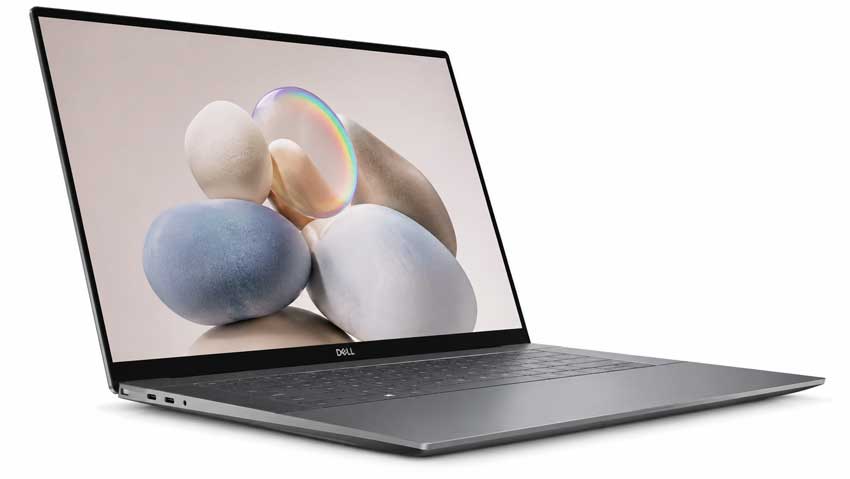
The 2026 Dell XPS 16 is a better fit for users who want a polished premium Windows laptop with current Copilot+ hardware rather than a gaming-style machine. Dell offers the latest model with Intel Core Ultra Series 3 processors, including the Core Ultra X7 358H and Core Ultra X9 388H.
Depending on configuration, the XPS 16 can include Intel Arc graphics, up to 64GB LPDDR5X memory, and a 16-inch 3.2K OLED touchscreen. That makes it well suited to productivity, coding, light-to-moderate local AI, and creative work where design, display quality, and portability matter alongside AI acceleration.
The important limitation is that an integrated-GPU XPS configuration should not be compared directly with an RTX 5080 or RTX 5090 laptop for heavy generative AI. If your primary workload is Stable Diffusion, intensive AI video processing, or CUDA-based development, prioritize a discrete RTX GPU instead.
Specs:
Pros:
- Premium design and strong display options.
- Up to 64GB memory provides more room for development and multitasking.
- Current Intel Core Ultra Series 3 platform.
Cons:
- Integrated graphics are not ideal for the heaviest GPU AI workloads.
- Configuration differences can materially change AI performance.
Current pricing: Check current configurations on the Dell XPS 16 official page.
5. ASUS Zenbook A16 (2026)
Best Copilot+ AI Laptop for Battery Life
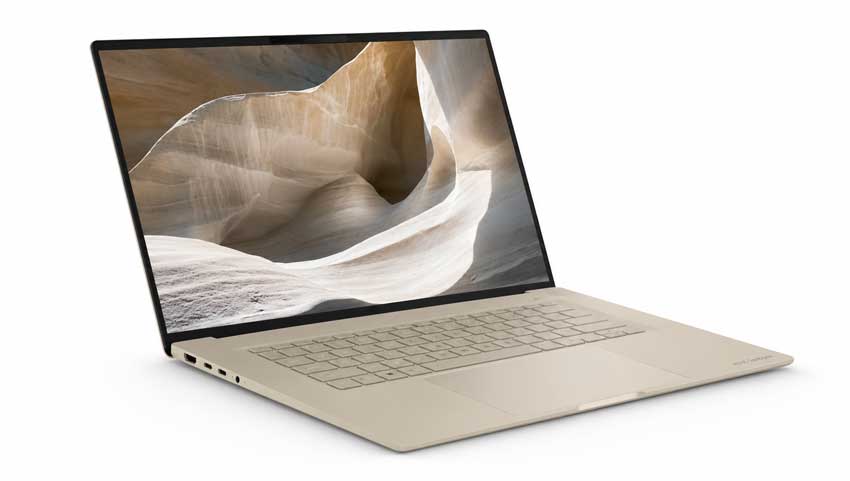
Not every AI buyer needs an RTX GPU or 128GB of memory. If your priorities are Copilot+ features, long battery life, productivity, and portability, the ASUS Zenbook A16 is one of the most interesting NPU-first laptops in 2026.
It can be configured with an 18-core Snapdragon X2 Elite Extreme and an NPU rated at up to 80 TOPS. ASUS lists a 48GB LPDDR5X configuration, a 16-inch 3K 120Hz OLED display, and a chassis weighing about 2.65 lb. ASUS also claims more than 21 hours of offline video playback in its controlled test scenario; real battery life will vary by workload, brightness, connectivity, and configuration.
The 80 TOPS NPU is designed for efficient on-device features such as Recall, Cocreator, Live Captions, Windows Studio Effects, and other Copilot+ experiences. The tradeoff is software architecture: this is a Windows on Arm machine, so users with specialized plug-ins, drivers, or legacy x86 applications should verify compatibility before buying.
Specs:
Pros:
- Up to 80 TOPS NPU.
- Very light for a 16-inch laptop.
- Large OLED display and strong battery efficiency.
- Good fit for on-device productivity AI.
Cons:
- Windows on Arm compatibility should be checked for specialized software.
- Not a replacement for a high-end RTX laptop in GPU-heavy AI workloads.
Current pricing: Check the latest configuration on the ASUS Zenbook A16 official page.
6. Lenovo IdeaPad Slim 5x Gen 11
Best Value AI Laptop
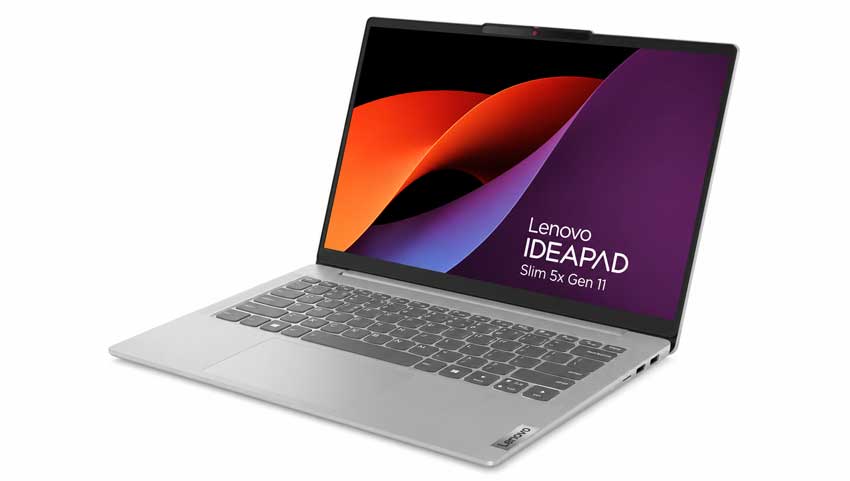
The Lenovo IdeaPad Slim 5x Gen 11 brings current-generation Copilot+ hardware into a lower price tier than premium creator and workstation models. It is a sensible choice for students, office users, and everyday AI users who want efficient local features without paying for a discrete GPU they may never fully use.
Current Snapdragon configurations use the Snapdragon X2 Plus platform. Lenovo's product specifications list a Qualcomm Hexagon NPU with up to 80 TOPS and configurations with up to 32GB LPDDR5X memory.
That is enough for Copilot+ features, research, transcription, coding assistants, productivity, and light creative work. It is not the right class of machine for large local LLMs, high-resolution Stable Diffusion workflows, or demanding AI video enhancement. For those tasks, spend more on memory capacity or a dedicated GPU.
Specs:
Pros:
- Current Snapdragon X2 Plus platform.
- Strong NPU capability for its class.
- More accessible than high-end creator and workstation laptops.
Cons:
- Integrated graphics limit heavier generative AI workloads.
- Windows on Arm software compatibility still matters for specialized apps.
Current pricing: Check regional configurations on the Lenovo official page.
7. MacBook Pro with M5 Pro or M5 Max
Best Mac for AI
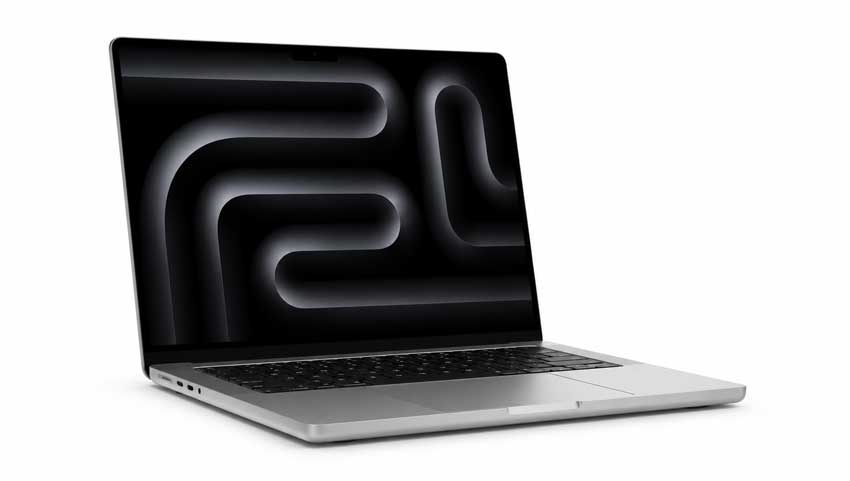
For macOS users, the MacBook Pro with M5 Pro or M5 Max is the strongest current option for demanding local AI and creative work. Apple's approach differs from a conventional Windows laptop because CPU, GPU, Neural Engine, and other accelerators work around a unified-memory architecture.
The M5 Pro includes a 16-core Neural Engine and GPU Neural Accelerators, while the M5 Max can be configured with up to a 40-core GPU, 128GB unified memory, and up to 614GB/s memory bandwidth. That large shared memory pool is particularly useful for local models and creative workloads that would otherwise be limited by fixed GPU VRAM.
Apple also includes dedicated media engines for H.264, HEVC, ProRes, ProRes RAW, and AV1 decode, which makes the MacBook Pro especially attractive for creators combining AI with video production. The main limitation is software ecosystem: workflows that require CUDA, TensorRT, or NVIDIA-only libraries are better suited to an RTX laptop.
Specs:
Pros:
- Up to 128GB unified memory for local models and large creative projects.
- High memory bandwidth and dedicated media engines.
- Strong AI acceleration across GPU Neural Accelerators and Neural Engine.
- Excellent fit for macOS creative workflows.
Cons:
- High-memory M5 Max configurations are expensive.
- Not suitable for software that specifically requires NVIDIA CUDA or TensorRT.
Current pricing: Check current 14-inch and 16-inch configurations on the Apple MacBook Pro official page.
What Makes a Laptop Good for AI in 2026?
A laptop does not become good at every AI task just because it has an NPU. Modern AI laptops usually rely on three different compute engines, and each is better suited to different work.
CPU: General Compute and Preprocessing
The CPU handles the operating system, application logic, data preparation, code compilation, and AI tasks that are not efficiently offloaded to another processor. CPU performance still matters, especially when an application mixes AI inference with conventional compute.
GPU: Generative AI, Image, Video, and Parallel Workloads
GPUs are designed for highly parallel computation. They remain extremely important for Stable Diffusion, AI image generation, video enhancement, 3D rendering, many machine-learning frameworks, and local models that use GPU acceleration.
For NVIDIA-based workflows, VRAM is especially important because the model, tensors, frames, and intermediate data often need to fit into GPU memory. A faster GPU with too little VRAM can still become the bottleneck.
NPU: Efficient On-Device AI
An NPU is optimized for AI inference at relatively low power. It is ideal for continuous background tasks such as live captions, webcam effects, audio processing, transcription, and other on-device AI experiences that should not keep the CPU or GPU fully active.
Microsoft currently defines Copilot+ PCs around a compatible processor or SoC with an NPU capable of at least 40+ TOPS, together with 16GB RAM and 256GB storage. That is a useful baseline for Windows AI features, but it should not be confused with the requirements for heavy local generative AI. See Microsoft's current Windows 11 and Copilot+ PC requirements.
AI Laptop Performance Comparison: Which Hardware Fits Your Workload?
A single "AI benchmark" score cannot tell you which laptop is best for every AI task. NPU-heavy background features, local LLM inference, Stable Diffusion, and AI video processing stress different parts of the system. A more useful comparison is to look at the compute engine and memory available to the workload you actually use.
Bottom line: Do not choose an AI laptop by TOPS alone. A high NPU number can be excellent for Copilot+ features while still being slower than a discrete GPU in image generation or video AI. Likewise, a powerful GPU may be limited by VRAM when a local model becomes too large.
NPU vs GPU for AI: Which Matters More?
The answer depends on what you mean by "AI." NPUs and GPUs are both AI accelerators, but they are optimized for different goals.
Choose a Strong NPU If You Mainly Use:
- Copilot+ and other Windows on-device AI features.
- Live captions and real-time translation.
- Windows Studio Effects, background blur, and camera framing.
- Voice processing, transcription, and light inference.
- AI features that need to run continuously without draining the battery quickly.
Choose a Strong GPU If You Mainly Use:
- Stable Diffusion and other AI image generators.
- AI video enhancement, upscaling, interpolation, and denoising.
- 3D rendering and GPU-assisted creative software.
- Machine-learning frameworks and CUDA-accelerated development.
- Local models that can take advantage of GPU acceleration.
Prioritize Memory If You Want to Run Local LLMs
Local language models can be limited by memory before raw compute becomes the problem. This is why systems with 64GB or 128GB of unified or shared memory can be attractive even if they do not use a conventional discrete GPU. Model size, quantization, context length, and runtime all affect the real requirement.
How Much RAM and VRAM Do You Need for AI?
There is no universal RAM or VRAM requirement for AI, but the table below gives a practical starting point for buying a laptop in 2026.
These are practical guidelines, not hard limits. A quantized model can require far less memory than a full-precision model, while higher-resolution video, larger batch sizes, or longer context windows can push memory use much higher.
Best AI Laptop for AI Image and Video Work
If your main goal is AI-assisted photo or video creation, focus less on the "AI PC" label and more on the GPU, VRAM, system memory, and the acceleration backend supported by your software.
For Windows creators, the ROG Zephyrus G16 is the strongest fit in this list because it can combine a 50 TOPS NPU with RTX 50-series graphics and 16GB or 24GB of dedicated GDDR7 VRAM on higher-end configurations. That gives image generators, video enhancement software, and CUDA-based applications far more room than a typical integrated-GPU Copilot+ PC.
The HP ZBook Ultra G1a and ROG Flow Z13 are better alternatives when your workload benefits from a very large shared-memory pool instead of fixed VRAM. On macOS, the M5 Pro / M5 Max MacBook Pro is the stronger choice for creators who want unified memory, Apple media engines, and local AI acceleration without leaving the Mac ecosystem.
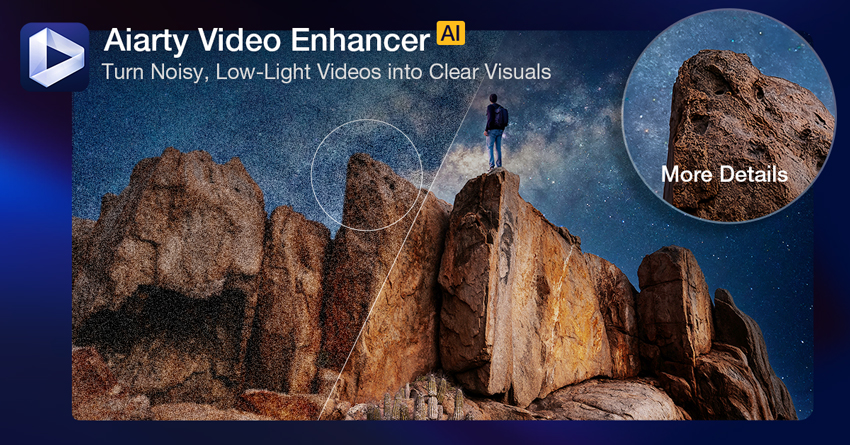
Aiarty Video Enhancer uses GPU acceleration for compute-heavy tasks such as AI upscaling, denoising, deblurring, frame interpolation, and detail restoration. On Windows, it supports DirectML acceleration across compatible AMD, Intel, and NVIDIA hardware, while TensorRT acceleration is available on supported NVIDIA GPUs.
For dedicated GPUs, Aiarty currently requires at least 4GB VRAM for GPU acceleration and recommends 8GB or more VRAM for smoother inference. NVIDIA RTX 20, 30, 40, and 50 series GPUs are supported by its current TensorRT path, while Apple Silicon Macs including M1 through M5 are supported on macOS.
- NVIDIA RTX: Best fit when you want TensorRT acceleration and higher VRAM options.
- AMD / Intel: Compatible hardware can use DirectML acceleration on Windows.
- Apple Silicon: M1, M2, M3, M4, and M5 processors are supported on current macOS versions.
- Local processing: AI enhancement runs on the computer instead of requiring a cloud workflow.
How We Chose These AI Laptops
We did not treat every laptop with an NPU as equally "AI-ready." Instead, we compared the hardware and software characteristics that matter for different AI workloads:
- GPU and VRAM: Important for generative AI, video enhancement, 3D, and many machine-learning workloads.
- NPU performance: Important for power-efficient, on-device AI features such as Copilot+, live captions, and camera effects.
- RAM and memory architecture: Critical for local models, large datasets, and multitasking.
- Software compatibility: Including CUDA/TensorRT dependence, Windows on Arm compatibility, and macOS support.
- Current availability: We prioritize models that remain relevant and purchasable in 2026, even when a specialized model originally launched in 2025.
- Use-case fit: A laptop that is excellent for Copilot+ is not automatically the best laptop for local LLMs or AI video.
This guide is based on current manufacturer specifications and software requirements. We do not present a specification table as a hands-on benchmark, and we do not claim first-hand testing of a laptop unless it has actually been tested.
Which AI Laptop Should You Buy?
If you want one laptop that can handle the widest range of AI and creative workloads, choose the ASUS ROG Zephyrus G16 (2026). Its combination of a modern NPU and high-end RTX graphics makes it far more versatile than an NPU-only AI PC.
If your priority is running large models locally, the HP ZBook Ultra G1a is the better choice because of its 128GB unified-memory option and the ability to allocate a large portion of that memory to graphics workloads. The ROG Flow Z13 offers a similar shared-memory advantage in a much smaller form factor.
For a premium Windows productivity machine, consider the Dell XPS 16. For Copilot+, mobility, and battery efficiency, choose the ASUS Zenbook A16. For a more affordable Copilot+ option, the Lenovo IdeaPad Slim 5x Gen 11 makes more sense. And for macOS users, the MacBook Pro with M5 Pro or M5 Max is the strongest option in this guide.
The most important rule is simple: buy for the AI workload you actually plan to run, not for the biggest TOPS number on the spec sheet.
 FAQs
FAQs
For the widest range of AI workloads, the ASUS ROG Zephyrus G16 (2026) is our best overall pick because it combines a modern Intel NPU with up to NVIDIA RTX 50-series laptop graphics. For local LLMs and memory-heavy models, the HP ZBook Ultra G1a is a better fit because it can be configured with up to 128GB unified memory.
An AI laptop usually includes hardware that can accelerate AI workloads, such as an NPU, GPU, or both. Copilot+ PCs specifically require a compatible NPU capable of at least 40+ TOPS, 16GB RAM, and 256GB storage. Heavier local AI workloads may require a stronger GPU, more VRAM, or more system memory than the Copilot+ baseline.
Not universally. An NPU is optimized for efficient on-device inference and background AI tasks, while a GPU is usually better for highly parallel workloads such as image generation, AI video enhancement, 3D rendering, and many machine-learning frameworks. The best AI laptops increasingly include both.
16GB is enough for many Copilot+ and everyday AI tasks. For AI coding, creative work, image generation, or heavier multitasking, 32GB is a better target. Local LLM users may benefit from 64GB or 128GB depending on model size, quantization, context length, and runtime.
It depends on the model and workload. 8GB can handle many mainstream AI creative tasks, while 12GB, 16GB, or 24GB gives you more room for larger models, higher resolutions, and heavier video processing. If you run large local models, a unified-memory system can provide another path beyond fixed GPU VRAM.
The HP ZBook Ultra G1a is one of the strongest choices in this guide for local models because it supports up to 128GB unified memory, with a large portion assignable to graphics workloads. The ROG Flow Z13 also offers up to 128GB shared memory in a smaller design, while the M5 Max MacBook Pro can be configured with up to 128GB unified memory on macOS.
No. AMD, Intel, Qualcomm, and Apple hardware can all accelerate useful AI workloads. However, NVIDIA remains important when your software depends on CUDA or TensorRT. If your main applications are built specifically for NVIDIA acceleration, an RTX laptop is the safer choice.
They are good for efficient on-device AI features, but the Copilot+ label alone does not guarantee strong performance in local LLMs, Stable Diffusion, or AI video. For those workloads, compare the GPU, VRAM, RAM, memory architecture, and software backend in addition to the NPU.

This post was written by Brenda Peng, a seasoned editor at Digiarty Software. With AI assistance for brainstorming and drafting, the post is reviewed for accuracy by Abby Poole.
