


Microsoft Clipchamp is one of the easiest video editors to start using on Windows. It is built into Windows 11, works in Edge or Chrome, and lets free users create and export 1080p videos without a standard watermark. It also includes templates, screen recording, auto captions, AI voiceovers, silence removal, and other tools aimed at people who want to finish a video without learning professional editing software.
That convenience does not make Clipchamp the right editor for every project. Its performance still depends on your computer, its advanced controls are limited, and long or media-heavy timelines can become uncomfortable to manage. This updated Clipchamp review explains what is free, what changed in 2026, where the editor performs well, and when you should choose a more capable alternative.
Clipchamp Review: Quick Verdict
Clipchamp is best for: beginners, Windows users, educators, marketers, students, and creators making short social videos, presentations, tutorials, or simple YouTube content.
Clipchamp is not ideal for: professional editors, complex long-form projects, advanced color grading, multicamera work, detailed motion graphics, or mobile-first production.
Bottom line: the free plan is genuinely useful. Watermark-free 1080p export, a straightforward timeline, recording tools, and built-in AI features make Clipchamp a strong entry-level editor. Its main weaknesses are limited precision and weaker performance as projects become longer, higher-resolution, or more layered.
What Is Clipchamp?
Clipchamp is Microsoft's official beginner-friendly video editor. Microsoft acquired Clipchamp in 2021 and later made it the built-in video editor for Windows 11. A Windows desktop app is available, but it uses web technologies at its core. The personal version can also run directly in Microsoft Edge or Google Chrome on Windows, macOS, Linux, and Chromebooks.
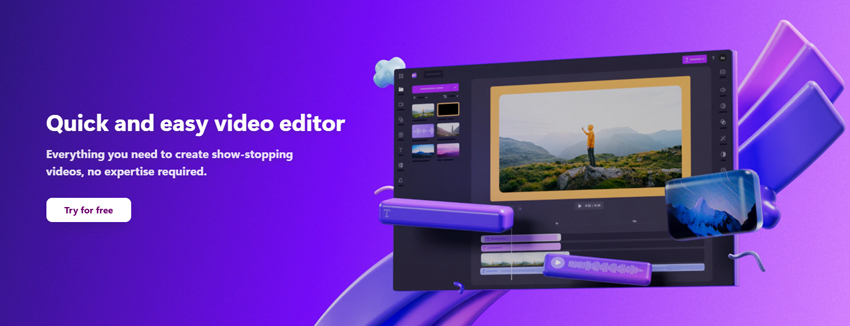
Unlike a traditional cloud editor that uploads every source file for remote processing, Clipchamp processes much of the editing workload locally on your computer. In personal accounts, project information is saved to your Clipchamp account, while original media generally remains on your device unless content backup or a sharing option is used. Work and school projects are more closely integrated with OneDrive or SharePoint.
This hybrid approach can improve privacy and reduce the need to upload large files before editing. It also means Clipchamp is not independent of your hardware. RAM, CPU, GPU, browser storage, and free disk space all affect preview and export performance.
What Changed in Clipchamp in 2026?
Older Clipchamp reviews can now be misleading, especially about mobile support, premium plans, and how projects are stored. These are the most important updates to know in 2026.
The Clipchamp iOS App Is No Longer Supported
Microsoft ended support for the Clipchamp iOS app on June 9, 2026. The company says it is focusing on the web and desktop versions because most users prefer editing there. Clipchamp should therefore be treated as a desktop-first editor rather than a mobile video editing platform.
Creators who do most of their work on an iPhone, Android phone, or tablet will have a smoother workflow with a mobile-first tool such as CapCut, Canva, Adobe Express, or VN.
Premium Features Are Included with Eligible Microsoft 365 Plans
Clipchamp still offers a free personal plan. Premium features such as 4K export, premium stock assets, premium effects, and a brand kit are also included with eligible Microsoft 365 Personal and Family subscriptions. Plan availability and pricing vary by country, so it is safer to check Microsoft's current Clipchamp pricing page than rely on an old fixed monthly price.
Project Storage Depends on the Account Type
Clipchamp's personal version and work version do not store projects in exactly the same way. Personal projects usually access source files locally, while optional content backup can make projects easier to reopen on another computer. Work and school projects store project files and assets in OneDrive or SharePoint by default.
In either case, do not delete, rename, or move source files while a project still depends on them. Clipchamp may ask you to locate the files again if the originals are missing.
Clipchamp Features: What Is Actually Useful?
Clipchamp covers the essentials well, but the most important question is not how many features it lists. It is whether those tools make common editing jobs faster without creating unnecessary complexity.
1. Interface and Core Editing Tools
Clipchamp uses a familiar layout: media and tools on the left, a preview in the center, properties on the right, and a multitrack timeline at the bottom. Beginners can normally understand the basic workflow within minutes.
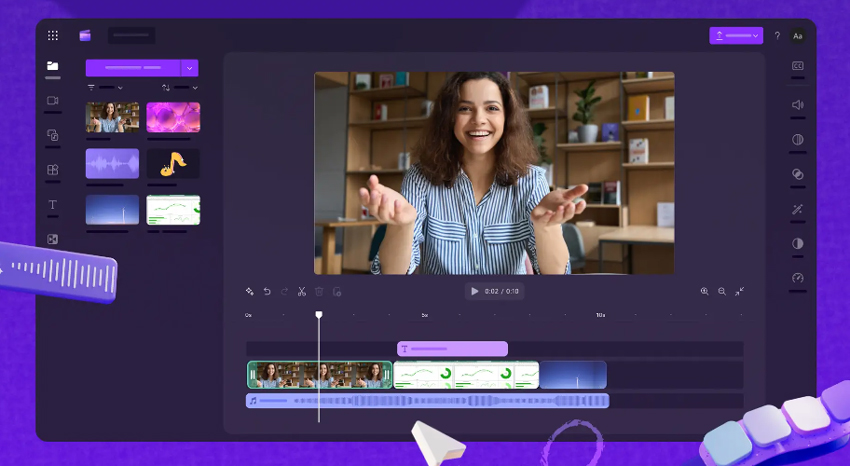
The editor includes the core tools needed for everyday projects:
- Trim, split, crop, and rotate: remove unwanted footage, divide clips, and reframe the image.
- Resize for social media: switch between formats such as 16:9, 9:16, 1:1, and 4:5 for YouTube, Shorts, TikTok, Reels, and feed posts.
- Text and titles: add animated titles, lower thirds, subtitles, and simple text overlays.
- Transitions and effects: connect scenes with transitions and add filters, overlays, stickers, or basic visual effects.
- Basic color adjustment: change exposure, contrast, saturation, temperature, and related settings.
- Audio editing: adjust volume, detach audio, add fades, insert music, and place sound effects.
These tools are well suited to short videos and straightforward edits. The limitations appear when a project requires advanced keyframing, detailed masking, multicamera editing, professional color scopes, sophisticated audio mixing, or precise project organization.
2. AI Editing Tools
Clipchamp includes several AI-assisted tools in the free editor. They can remove repetitive steps, although every automated result still needs a human review.
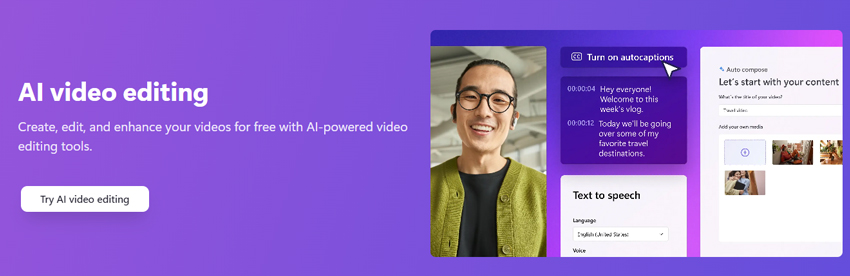
- Auto captions: transcribe speech and generate editable subtitles. This is useful for social videos, tutorials, interviews, and accessible content, but names, accents, music, and technical terms may need correction.
- Text to speech: convert a script into an AI voiceover with selectable languages, voices, pitch, and pace.
- Silence remover: detect pauses and suggest cuts in talking-head videos, podcasts, and tutorials. Review the cuts so natural breathing and emphasis are not removed.
- Noise suppression: reduce mild background noise and microphone static. It helps with common room noise but does not replace dedicated audio restoration for heavily damaged recordings.
- Auto compose: assemble uploaded photos and clips into a draft montage with music and transitions. It is useful for a quick starting point, but shot selection and timing often require manual refinement.
- Image background removal: isolate subjects in still images for overlays, thumbnails, or simple composites.
The strongest AI features are auto captions and text to speech because they solve clear production problems. Auto compose is more variable: it can save time for casual montages, but it cannot understand which moments matter most to your story.
3. Recording, Templates, and Stock Media
Clipchamp can record a screen, webcam, microphone, or screen and camera together. This makes it especially practical for tutorials, online courses, product demonstrations, reaction videos, presentations, and internal training.
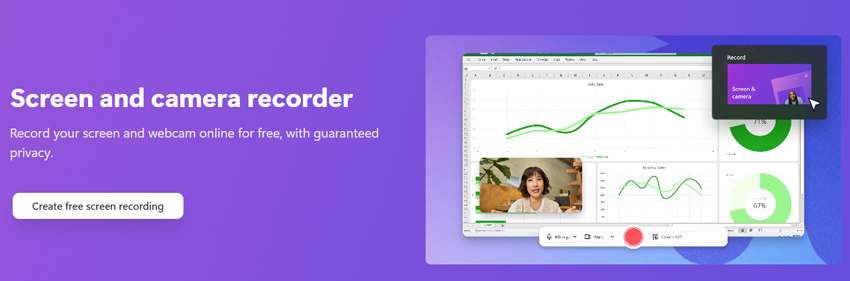
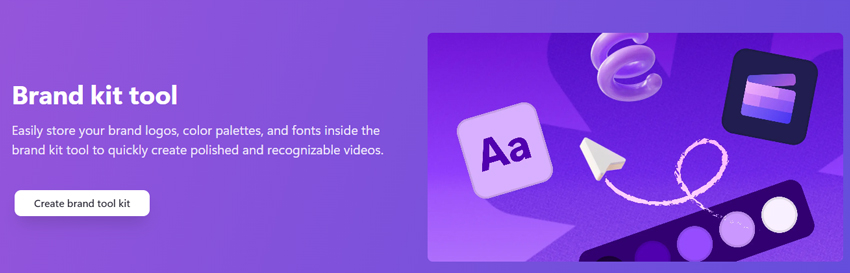
It also includes editable templates and a stock library with video, images, music, sound effects, stickers, and GIFs. The free selection is enough for many casual projects, while premium plans unlock a larger collection and brand kit tools for storing logos, colors, and fonts.
Templates help users finish content quickly, but they can also make videos look generic. For business or creator work, replace stock text, colors, music, pacing, and imagery rather than publishing a template with only minor edits.
4. Export Quality, Formats, and Watermarks
According to Microsoft's current Clipchamp export guide, free users can export videos at 480p, 720p, or 1080p. Eligible premium users can export up to 4K UHD. Standard video exports use MP4, short projects can be exported as GIFs, and audio-only projects can be saved as M4A files.
Clipchamp does not add a standard watermark to free 1080p exports. However, a project that includes premium stock media, effects, or another paid asset cannot be exported unless you upgrade or remove the premium item.
Remember that export resolution is not the same as source quality. Exporting a blurry 720p clip at 4K increases its pixel dimensions, but it does not automatically restore lost texture, reduce compression artifacts, or reconstruct fine detail.
Clipchamp Performance and Limitations
Clipchamp is often described as a lightweight browser editor, but that can create the wrong expectation. The editor runs through browser technology while much of the media processing happens locally. Your device therefore remains a major part of the editing system.
Clipchamp System Requirements
Microsoft recommends at least 8GB of RAM, with 16GB or more providing a better experience. A 64-bit computer, 64-bit operating system, current 64-bit version of Edge or Chrome, a recent graphics card, and sufficient internal storage are also important.
Video editing uses both the CPU and GPU. Older hardware may struggle even when the Clipchamp interface itself opens without a problem.
Is Clipchamp Good for Long Videos?
Clipchamp can edit long videos, but it is most comfortable with short or moderately sized 1080p projects. Performance becomes less predictable when you combine:
- Large 4K source files
- Long timelines with many cuts
- Multiple video, image, text, and audio layers
- Heavy transitions, effects, captions, and overlays
- Limited RAM or free disk space
- Many other browser tabs and applications running at the same time
Microsoft does not impose a simple input file-size limit, but it warns that larger files can cause loading or performance problems. For demanding 4K footage, creating smaller editing copies or converting clips to a more manageable format can produce a smoother timeline.
Common Clipchamp Problems
The most common workflow problems include slow imports, preview buffering, timeline lag, missing source media, high temporary storage use, and exports that stop or fail.
Before abandoning a project, try the following:
- Close unused browser tabs and memory-heavy applications.
- Update Edge, Chrome, or the Windows Clipchamp app.
- Free space on the computer's internal drive.
- Restart the browser and reopen the project.
- Temporarily disable browser extensions that may block required functions.
- Relink source media if files were moved or renamed.
- Convert unusually encoded or extremely large source files before importing them again.
Does Clipchamp Work Offline?
Clipchamp is not a fully offline editor. Some media processing and cached project data are local, but signing in, opening the service, using stock content, syncing projects, backing up files, and accessing some AI or sharing features require an internet connection. Users who regularly edit without reliable connectivity should choose a traditional desktop editor.
Clipchamp Pricing: Free vs. Premium
Clipchamp pricing has changed over time, so old reviews that list a fixed Essentials price can be inaccurate. The current official pricing page presents a free plan and premium features included with eligible Microsoft 365 Personal and Family plans. A standalone Premium subscription may also appear for some personal accounts or regions.
Is Clipchamp Premium worth it? It is easiest to justify when you already pay for Microsoft 365 and need 4K export, premium assets, or brand consistency. If video editing is your main reason for paying, compare Clipchamp with more powerful desktop editors before subscribing.
Clipchamp Pros and Cons
Clipchamp's strengths are most noticeable in small, fast projects. Its weaknesses become more important as the production becomes longer or more technical.
Related reading: 12 Best Open Source Video Editors Like Clipchamp
- Easy drag-and-drop timeline with a very short learning curve.
- Free 1080p exports without a standard watermark.
- Useful auto captions, AI voiceovers, silence removal, and noise suppression.
- Built-in screen, webcam, microphone, and combined screen-camera recording.
- Templates and stock assets make quick social and business videos easier.
- Convenient for Windows 11 and Microsoft 365 users.
- Local media processing can reduce the need to upload source footage before editing.
- Limited advanced keyframing, motion tracking, multicamera editing, and color grading.
- Long, layered, or high-resolution projects can lag on less powerful computers.
- Preview and workspace controls are less flexible than professional editors.
- Free users cannot export in 4K.
- Safari and Firefox are not the primary supported editing browsers.
- The iOS app is no longer supported, making Clipchamp a poor choice for mobile-first creators.
- It is not a fully offline editing solution.
Who Should Use Clipchamp?
Clipchamp Is a Good Choice For
- Beginners: the interface is easier to learn than professional editing suites.
- Windows users: Clipchamp is already built into Windows 11 and fits naturally into a Microsoft workflow.
- Teachers and students: screen recording, webcam recording, captions, voiceovers, and presentation templates are practical for educational content.
- Social media marketers: preset aspect ratios, subtitles, templates, and quick exports work well for basic campaigns.
- Small businesses: it can handle product demonstrations, onboarding videos, internal updates, and simple advertisements.
- Occasional YouTube creators: it is capable enough for tutorials, commentary, presentations, and straightforward talking-head videos.
Clipchamp Is Not the Best Choice For
- Professional editors and filmmakers who need advanced project organization, grading, compositing, and audio controls.
- Mobile-first creators who edit mainly on phones or tablets.
- Users handling large 4K productions with many clips, effects, and audio layers.
- Creators who need dependable offline editing while traveling or working with limited connectivity.
- Teams requiring complex review workflows beyond basic Microsoft 365 storage and sharing.
Clipchamp vs. CapCut vs. Canva vs. DaVinci Resolve
The best Clipchamp alternative depends on whether you value simplicity, mobile creation, design templates, or professional editing depth.
Choose Clipchamp when you want the fastest route from raw clips to a clean 1080p video.
Choose CapCut when mobile editing, social effects, and short-form trends are central to your workflow.
Choose Canva when the video is part of a larger brand, presentation, or graphic-design project.
Choose DaVinci Resolve when you need professional control and are willing to accept a longer learning curve.
How to Improve Clipchamp Video Quality
Clipchamp can adjust brightness, contrast, saturation, temperature, filters, and other basic appearance settings. These controls work well for footage that is already reasonably clean, but they cannot fully repair severe blur, compression, noise, or lost detail.
A practical workflow for weak source footage is:
- Complete the edit, captions, music, and transitions in Clipchamp.
- Export the project at the highest resolution available in your plan.
- Open the exported file in a dedicated video enhancement tool.
- Reduce noise and compression artifacts before applying aggressive sharpening.
- Upscale only when a higher-resolution delivery file is actually needed.
- Review faces, text, hair, fabric, and fast motion for artificial details before publishing.
Improve Low-Quality Clipchamp Exports with Aiarty Video Enhancer
Aiarty Video Enhancer is a desktop AI video enhancement tool that can be used after editing in Clipchamp. It is designed to upscale low-resolution footage, reduce noise, clean compression artifacts, improve soft edges, and recover more visible texture in difficult source clips.
This workflow is most useful for older phone footage, compressed downloads, screen recordings, archived video, or clips that were already blurry before they entered Clipchamp. It cannot turn every poor source into true native 4K, but it can produce a cleaner result than merely exporting the same low-detail footage at a larger frame size.



Disclosure: Aiarty Video Enhancer is developed by the publisher of this review. The Clipchamp evaluation above is kept separate from this optional workflow recommendation.
Final Verdict: Is Clipchamp Worth Using in 2026?
Yes, Clipchamp is worth using when the project is simple and speed matters more than advanced control.
The free plan remains the main reason to recommend it. A beginner can import clips, trim a timeline, add titles and captions, record a screen or webcam, and export a clean 1080p video without paying or dealing with a standard watermark.
Clipchamp becomes less convincing when a project requires professional color work, complex animation, multicamera editing, extensive audio mixing, reliable mobile editing, or a heavy 4K timeline. At that point, a more capable desktop editor will provide better precision and room to grow.
For Windows users, educators, students, marketers, and occasional creators, Clipchamp remains one of the most accessible free video editors available. Treat it as a fast content-production tool rather than a replacement for a full post-production suite.
 Clipchamp FAQs
Clipchamp has a free personal plan with core editing tools, recording, AI subtitles, AI voiceovers, silence removal, free stock assets, and unlimited exports up to 1080p. Premium stock, premium effects, a brand kit, and 4K export require an eligible paid plan.
No standard Clipchamp watermark is added to free exports. If your project contains a premium stock asset or paid feature, you must upgrade or remove that item before exporting.
Yes. Clipchamp supports up to 4K UHD export with an eligible Premium or Microsoft 365 Personal or Family plan. The free plan exports up to 1080p.
Clipchamp is good for simple YouTube tutorials, commentary, presentations, screen recordings, and short talking-head videos. It is less suitable for complex long-form videos, multicamera work, advanced motion graphics, or professional color grading.
Yes. Mac users can open the personal version of Clipchamp in a current version of Microsoft Edge or Google Chrome. Clipchamp does not offer the same native macOS desktop app experience as it does on Windows.
Not fully. Clipchamp processes much of the media locally, but account access, stock content, syncing, backup, sharing, and some online features still require an internet connection.
Clipchamp is a Microsoft-owned product. In personal projects, source media is generally processed locally rather than uploaded to a server for editing unless you use backup, sharing, or support options. Work and school projects use OneDrive or SharePoint more extensively. Review Microsoft's current privacy terms before editing sensitive material.
Clipchamp performance depends on RAM, CPU, GPU, available storage, source file size, resolution, codec, and timeline complexity. Close unused applications, free disk space, update the browser or app, and convert unusually large or incompatible source files when necessary.
The Clipchamp iOS app stopped being supported on June 9, 2026. The desktop editor also does not run on phones or tablets, so mobile-first creators should use another editor.
Clipchamp is usually the simpler choice for Windows-based editing, screen recording, presentations, and Microsoft workflows. CapCut is generally stronger for mobile editing, social effects, and fast-moving short-form content. The better tool depends on your platform and production style.

This post was written by Ashley Brown, a videographer turned AI explorer. As an associate writer at Digiarty Software, she examines video editing and enhancement tools with a focus on practical workflows, current product limitations, and clear buying guidance. Accuracy confirmed by Abby Poole.
